Preparatory Mindset
Postpartum haemorrhage (PPH) is the #1 cause of maternal death worldwide — and the most "preventable and treatable" of all obstetric emergencies (CM exam tested). The exam and OSCE mindset is a drill, not a differential: you must know the 4 Ts (Tone, Tissue, Trauma, Thrombin), the escalating response (call for help → uterotonics → mechanical → surgical), and the shock index. Uterine atony is 90% — so every labour ends with active management of the 3rd stage (AMTSL): oxytocin + controlled cord traction + uterine massage to prevent it. Blood loss estimation is unreliable (underestimated 30-50%) — use shock index (HR/SBP): ≥0.9 → large bleed. Two other emergencies in this chapter: uterine rupture (scarred uterus, obstructed labour — catastrophic) and amniotic fluid embolism (AFE) (sudden collapse, DIC — mostly supportive).
Core Concepts
1. Definitions
| Type | Definition |
|---|---|
| Primary PPH | Blood loss ≥500 mL vaginal / ≥1000 mL C-section within 24 h of delivery (China: ≥500 mL vaginal; WHO: ≥1000 mL = severe) |
| Delayed/secondary PPH | Bleeding 24 h to 12 weeks postpartum (retained products, endometritis, subinvolution) |
| Massive PPH | Loss >1000 mL + shock, or >50% blood volume within 3 h, or >150 mL/min |
Why it matters: leading cause of maternal mortality; most PPH is avoidable (AMTSL, risk assessment, early escalation). Early Hb is unreliable (haemoconcentration) — don't use Hb to judge severity.
2. Blood loss estimation (multi-method)
- Visual estimate — inaccurate (underestimates by 30-50%, especially large bleeds).
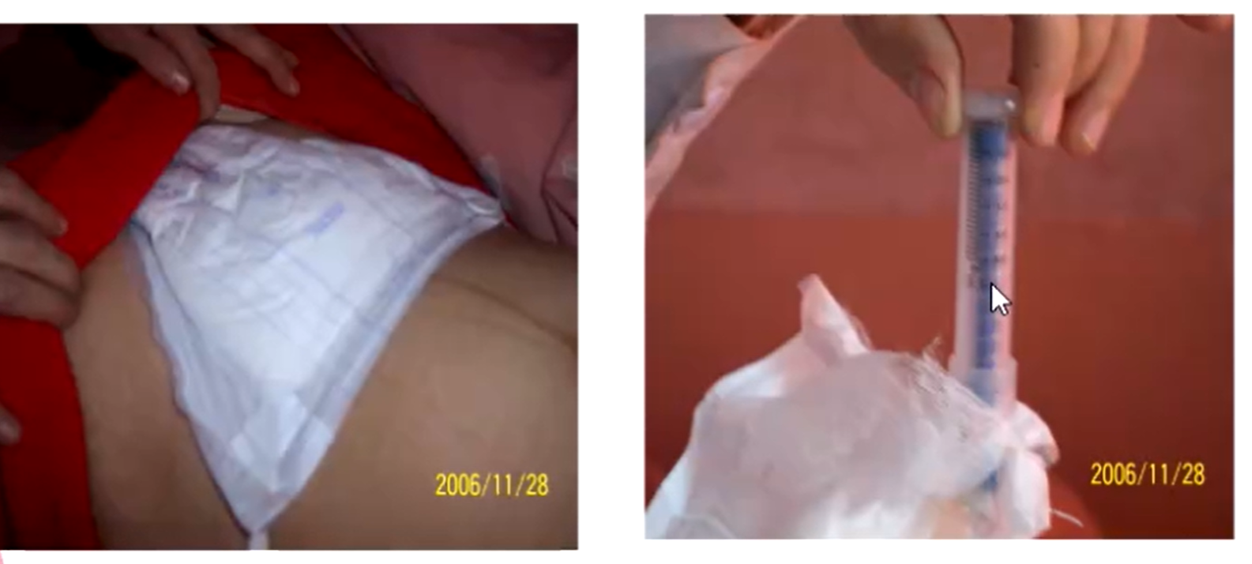
- Weighing method: blood loss (mL) = (wet weight − dry weight) / 1.05 (blood density).
- Shock index (SI) = HR / SBP:
| SI | Estimated loss | % blood volume |
|---|---|---|
| 0.5-0.7 | ~500 mL | ~10% |
| 0.7-0.9 | ~1000 mL | ~20% |
| 0.9-1.1 | ~1500 mL | ~30% |
| ≥1.4 | >2500 mL | >50% |
- Hb fall: every 10 g/L decrease ≈ 400-500 mL loss (delayed — not for early assessment).
3. The 4 Ts — causes of PPH
| T | Cause | Frequency | Management |
|---|---|---|---|
| Tone | Uterine atony (failure to contract) | 90% | Uterotonics + massage + tamponade |
| Tissue | Retained placenta/products/inversion | 6% | Removal (manual, MVA, curettage); treat inversion |
| Trauma | Perineal/vaginal/cervical laceration, uterine rupture, uterine inversion | 4% | Suture; repair per layers |
| Thrombin | Coagulopathy (DIC, thrombocytopenia, anticoagulants) | 1% | Blood products, treat cause (abruption, AFE) |
Atony risk factors: previous PPH, uterine overdistension (twins, polyhydramnios, macrosomia), prolonged labour, oxytocin augmentation, chorioamnionitis, general anaesthesia, grand multiparity, uterine fibroids (CM exam tested).
Atony signs: fundus rises, uterus soft with unclear outline, heavy vaginal bleeding; after massage + uterotonics uterus firms and bleeding stops → confirms atony.
4. Management — the PPH drill (primary)
| Step | Action |
|---|---|
| 0. Call for help | Senior obstetrician, anaesthetist, theatre, blood bank — activate major haemorrhage protocol (MHP) |
| 1. Resuscitate | ABC, high-flow O₂, 2 large-bore IV, crystalloid (warm), crossmatch, FBC/coag/fibrinogen; blood + FFP as per MHP; tranexamic acid 1 g IV (within 3 h of delivery, then repeat if needed) |
| 2. Assess cause (4 Ts) | Examine uterus (tone), vaginal/cervix (trauma), placenta (tissue), clotting (thrombin) |
| 3. Medical (Tone) | Uterotonics ladder: oxytocin (IV infusion) → ergometrine (if not hypertensive) → carboprost 15-methyl PGF2α IM (asthma caution) → misoprostol 800-1000 μg PR (as adjunct); simultaneously bimanual uterine compression/massage |
| 4. Mechanical | Uterine balloon tamponade (Bakri) or uterine gauze packing — effective for atony when drugs fail |
| 5. Surgical | Laparotomy: uterine compression sutures (B-Lynch), uterine artery ligation, internal iliac artery ligation, uterine artery embolisation (interventional radiology), escalating to hysterectomy (life-saving last step) |
| 6. Tissue | Manual removal of placenta, MVA/curettage (retained tissue); treat uterine inversion (replace before contractions) |
| 7. Trauma | Suture lacerations — cervical laceration: first stitch 0.5 cm above apex; >1 cm active bleeding → suture; vaginal/perineal: layer-by-layer, no dead space, avoid rectal mucosa |
5. Uterine rupture
Definition: full-thickness disruption of the uterine wall. Risk: previous C-section scar (most common), obstructed labour (primip, unscarred — Bandl ring), oxytocin hyperstimulation, trauma, malpresentation, uterine anomalies.
Clinical: sudden severe abdominal pain (often with loss of contractions), cessation of contractions, fetal distress/death, vaginal bleeding ± haematuria, shock, palpably absent presenting part, scar tenderness. In obstructed labour — retraction ring + maternal tachycardia.
Management: immediate laparotomy — repair if possible; hysterectomy if uncontrollable/salvageable concerns; blood products; neonatal resuscitation team. Prevention: careful VBAC selection, avoid prolonged obstructed labour, judicious oxytocin.
6. Amniotic fluid embolism (AFE) — the catastrophic collapse
Definition: amniotic fluid/debris enters maternal circulation → sudden cardiopulmonary collapse + DIC (intrapartum or immediately postpartum).
Clinical: sudden dyspnoea, chest pain, hypotension, hypoxia, cardiac arrest, seizures, DIC with severe haemorrhage — often during labour, C-section, or shortly after delivery.
Management (supportive, no specific treatment):
- Cardiorespiratory resuscitation — ICU, mechanical ventilation.
- Treat DIC — FFP, cryoprecipitate, platelets, fibrinogen.
- Uterotonics for coexisting PPH.
- Consider ECMO/inhaled prostacyclin in severe pulmonary hypertension.
- Multidisciplinary — obstetrician, anaesthetist, intensivist, haematologist.
High-Yield Points
| Topic | Must-remember |
|---|---|
| PPH definition | ≥500 mL vaginal / ≥1000 mL CS within 24 h |
| #1 cause | Uterine atony (90%) |
| Prevention | AMTSL — oxytocin + controlled cord traction + massage (3rd stage) |
| Shock index | HR/SBP ≥0.9 = large bleed (>30% blood volume) |
| TxA | Tranexamic acid 1 g IV within 3 h — reduces death |
| Uterotonics ladder | Oxytocin → ergometrine (not if HTN) → carboprost (not if asthma) → misoprostol PR |
| Tamponade | Bakri balloon before surgery |
| Surgical ladder | B-Lynch → artery ligation → embolisation → hysterectomy |
| Cervical laceration | First stitch 0.5 cm above apex |
| Retained placenta | Manual removal / MVA / curettage |
| Uterine rupture | Scarred uterus/obstructed labour; immediate laparotomy |
| AFE | Sudden collapse + DIC; supportive + resuscitation |
| Secondary PPH | 24 h-12 wk — retained products/endometritis |
Topic Summary
PPH is the leading preventable cause of maternal death. Prevent with AMTSL; recognise early with shock index and the 4 Ts (Tone = atony 90%, Tissue, Trauma, Thrombin). Management is a drill: call for help → resuscitate (TxA, blood) → uterotonics ladder → balloon tamponade → surgical (B-Lynch → artery ligation → hysterectomy) → suture trauma/remove tissue. Uterine rupture (scarred uterus, obstructed labour) and AFE (sudden collapse + DIC) are catastrophic differentials needing immediate laparotomy / ICU resuscitation respectively. The message: PPH kills by delay — escalate fast, treat the cause, control the airway and the blood.
LMCHK OSCE Practice — PPH Drill (Simulation)
Station setup: A 31-year-old G2P1 delivered vaginally 20 minutes ago. The midwife calls you: "She is bleeding heavily." You find the uterus soft and boggy at 2 cm above the umbilicus, and ~600 mL of fresh blood on the bed. HR 115, BP 95/60.
Candidate tasks (8 min):
- Call for help immediately (senior obstetrician, anaesthetist, blood bank — MHP).
- Assess: ABC, O₂, 2 large-bore IV, bloods (FBC, coag, fibrinogen, crossmatch); start warm crystalloid.
- First-line treatment for atony: rub up a contraction (uterine massage) + IV oxytocin (5 IU slow bolus then infusion); assess response.
- If bleeding continues: ergometrine (no HTN) → carboprost (no asthma) → misoprostol PR; bimanual compression; tranexamic acid 1 g IV.
- If still bleeding: Bakri balloon tamponade → prepare theatre (B-Lynch, hysterectomy); examine for trauma (laceration) and tissue (retained placenta); call haematology for MHP blood products.
- Document, escalate, and communicate with the woman/partner.
Key marking cues:
- Calls for help FIRST — teamwork is the exam point.
- Recognises atony (soft boggy uterus + rising fundus) and starts oxytocin + massage immediately.
- Uses the uterotonics ladder in order.
- Gives tranexamic acid.
- Escalates to tamponade and surgery without delay.
- Maintains communication with the patient.