Preparatory Mindset
Paediatric nephrology in this syllabus covers nephrotic syndrome (NS), acute post-streptococcal glomerulonephritis (APSGN), and urinary tract infection (UTI) — three very different diseases that all present with urine abnormalities. The mindset:
- Nephrotic syndrome: heavy proteinuria (>40 mg/m²/h or urine protein/creatinine >200 mg/mmol), hypoalbuminaemia (<25 g/L), oedema, hyperlipidaemia — minimal change disease is >85% in children → steroid-responsive (>90% respond to prednisolone) → relapses common but benign long-term. Complications: infection, thrombosis, steroid side effects.
- APSGN: haematuria (cola-coloured urine), hypertension, oedema, oliguria, ↓C3, ↑ASO, 1-3 weeks post-strep infection — management is supportive (BP control, fluid/salt restriction); prognosis excellent in children; C3 normalises in 6-8 weeks (persistent ↓C3 → think MPGN/Lupus).
- UTI: the "occult fever" of infants — fever without focus in a young child → urinalysis + culture; vesicoureteral reflux (VUR) is the main risk factor for renal scarring; treat promptly (oral/IV antibiotics), investigate after first febrile UTI in young children (USS ± DMSA ± MCUG).
The exam pearl: NS = protein-losing kidney (oedema, low albumin); APSGN = inflamed glomerulus (blood + hypertension); UTI = ascending infection (fever + pyuria).
Core Concepts
1. Nephrotic syndrome (NS)
Definition (the tetrad):
- Proteinuria — >40 mg/m²/h or urine protein/creatinine >200 mg/mmol (or 3+ dipstick)
- Hypoalbuminaemia — <25 g/L
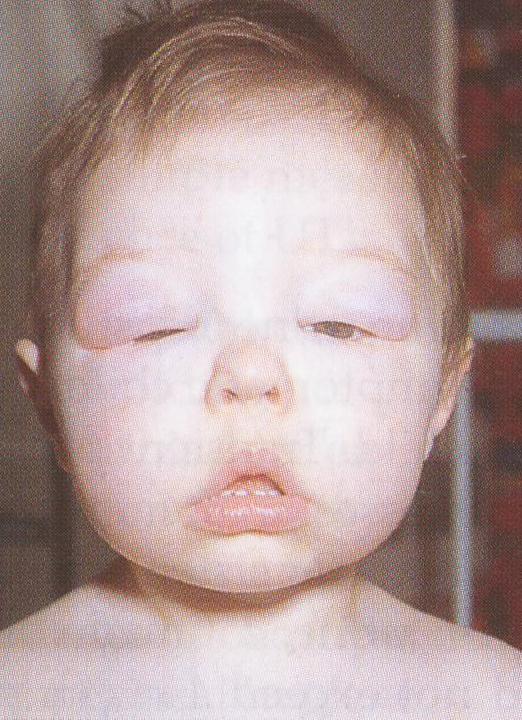
- Oedema (periorbital first → scrotal/labial → ascites/pleural) — from low oncotic pressure
- Hyperlipidaemia (cholesterol ↑)
Aetiology by age:
| Age | Most common |
|---|---|
| 1-10 years | Minimal change disease (MCD) — >85% |
| 10-16 years | Focal segmental glomerulosclerosis (FSGS), IgA nephropathy |
| Infant (<1 yr) | Congenital NS (Finnish type) |
| Secondary | Lupus nephritis, Henoch-Schönlein purpura (HSP), infections (hepatitis B), drugs (NSAIDs), diabetes (late) |
Pathology: MCD — normal light microscopy, effacement of foot processes on EM, negative immunofluorescence → steroid-responsive.
Clinical: periorbital oedema (worse in morning), puffy face, weight gain, oliguria, frothy urine; BP usually normal (unlike nephritic); urine dipstick 3-4+ protein.
Complications (important):
| Complication | Notes |
|---|---|
| Infection | Most important — pneumococcal peritonitis, cellulitis, UTI (loss of immunoglobulins/complement in urine) — fever in NS → sepsis workup |
| Thrombosis | Hypercoagulable (loss of antithrombin III, protein C/S, ↑platelets) — renal vein thrombosis, sagittal sinus thrombosis, DVT |
| Hypovolaemia/shock | Severe oedema + hypovolaemia (low albumin → low effective circulating volume) — can present with abdominal pain, cool peripheries |
| Steroid toxicity | Growth suppression, obesity, cataracts, osteoporosis, hypertension, diabetes, behavioural |
Management:
- Confirm diagnosis — urine protein, serum albumin, lipids; USS kidneys; (biopsy only if atypical — age <1 or >10, macroscopic haematuria, low C3, steroid-resistant).
- Prednisolone (steroid) induction: 60 mg/m²/day × 4 weeks then 40 mg/m² alternate days × 4 weeks (or per protocol).
- Response: ~90% remit within 4 weeks (steroid-sensitive NS — SSNS).
- Relapses (common): repeat steroid course; frequent relapses/steroid-dependent → second-line: levamisole, cyclophosphamide, calcineurin inhibitors (tacrolimus/cyclosporin), rituximab; steroid-resistant → biopsy + specialist (FSGS, MPGN).
- Supportive: salt/fluid restriction during oedema, albumin + furosemide for severe hypovolaemia/oedema, penicillin prophylaxis + pneumococcal vaccine (infection risk), daily urine dipstick at home, school attendance normal, avoid live vaccines on high-dose steroids.
Prognosis: SSNS — excellent, most outgrow by puberty; steroid-resistant — worse (FSGS → CKD risk).
2. Acute post-streptococcal glomerulonephritis (APSGN)
Pathogenesis: immune complex (IgG + C3) deposition after group A streptococcal infection (pharyngitis 1-2 weeks or skin 2-6 weeks earlier) → glomerular inflammation (increased cellularity, IgG+C3 deposits, subepithelial humps on EM).
Clinical (1-2 weeks after sore throat / 2-6 weeks after skin infection):
- Haematuria — macroscopic "cola-coloured/tea-coloured urine" (classic)
- Oedema (facial/periorbital, morning)
- Hypertension (salt/water retention) — headache, seizures if severe
- Oliguria (variable)
- Mild proteinuria
Investigations:
| Test | Finding |
|---|---|
| Urinalysis | Haematuria (RBC casts), proteinuria |
| Serum C3 | Low (hypocomplementaemia) — key test |
| ASO titer / anti-DNase B | Elevated (strep infection evidence) |
| Renal function | ↑ urea/Cr if oliguric |
| Blood pressure | Hypertension |
Differential: IgA nephropathy (haematuria during/resolved URTI, normal C3), MPGN (persistent low C3), lupus nephritis, HSP nephritis.
Management (SUPPORTIVE — no specific treatment):
- BP control — nifedipine/amlodipine; fluid + salt restriction; diuretics (furosemide) if fluid overload/oedema.
- Monitor — BP, urine output, renal function, electrolytes.
- Antibiotics — treat underlying strep infection (penicillin if active infection present; does NOT change nephritis course).
- Dialysis if severe oliguric AKI/hyperkalaemia/pulmonary oedema.
Prognosis: excellent in children — >95% full recovery; C3 normalises by 6-8 weeks; low risk of chronic kidney disease (persistent proteinuria/haematuria >6 months → refer; persistent ↓C3 >8 weeks → MPGN/lupus).
3. Urinary tract infection (UTI)
Definition: bacterial infection of the urinary tract — cystitis (lower) vs pyelonephritis (upper — fever, loin pain).
Why important in children: renal scarring from recurrent/pyelonephritic UTI → hypertension, CKD; VUR (vesicoureteral reflux) is the main risk factor; UTI in infants often presents without localising signs (fever only).
Risk factors: VUR, female sex, age <1, urinary obstruction (posterior urethral valves in boys), constipation, poor hygiene, catheterisation, voiding dysfunction.
Clinical:
| Age | Presentation |
|---|---|
| Neonate/infant | Fever (often only sign), poor feeding, lethargy, vomiting, jaundice (sepsis) |
| Child | Dysuria, frequency, urgency, abdominal pain, fever, loin pain, enuresis (secondary) |
Diagnosis:
- Urinalysis: pyuria (leukocyte esterase+), nitrite+ (gram-negative) — screening.
- Urine culture (midstream / catheter / suprapubic in infants) — the diagnostic test: >10⁵ CFU/mL (clean catch) or >10⁴ (catheter) significant.
- Sepsis screen in young/ill infants (blood culture, LP if febrile young infant).
Management:
- Antibiotics — empiric then per culture: amoxicillin-clavulanate, third-generation cephalosporin (cefixime/ceftriaxone), TMP-SMX (older); pyelonephritis/young infant → IV antibiotics (ceftriaxone) + admit.
- Rehydration, antipyretics.
- Urgent USS — hydronephrosis/abscess/obstruction (within 24-48 h if pyelonephritis).
- Further imaging after first febrile UTI (young children): USS + DMSA scan (scarring) ± MCUG (VUR — after 2nd infection or abnormal USS).
- Prophylaxis: low-dose antibiotics (trimethoprim) for VUR/grade ≥3 reflux or recurrent UTI; circumcision may reduce UTI in boys with VUR; treat constipation/voiding dysfunction.
Posterior urethral valves (PUV — boys): antenatal hydronephrosis, poor stream, distended bladder — obstruction → urgent surgery (valve ablation); long-term CKD risk — think in any boy with UTI + poor stream.
High-Yield Points
| Topic | Must-remember |
|---|---|
| NS tetrad | Proteinuria + hypoalbuminaemia (<25) + oedema + hyperlipidaemia |
| NS most common type | Minimal change (>85% children) |
| NS first-line | Prednisolone — ~90% respond |
| NS complications | Infection (pneumococcal peritonitis), thrombosis, hypovolaemia, steroid toxicity |
| NS relapse | Repeat steroids; frequent → levamisole/cyclophosphamide/CNI/rituximab |
| APSGN timing | 1-2 wk post-pharyngitis / 2-6 wk post-skin infection |
| APSGN classic | Cola-coloured urine + hypertension + oedema + ↓C3 + ↑ASO |
| APSGN management | Supportive only — BP control, fluid/salt restriction |
| APSGN prognosis | Excellent; C3 normalises 6-8 weeks |
| Persistent ↓C3 | MPGN / lupus |
| UTI infant | Fever only — urinalysis + culture |
| UTI scarring | VUR main risk; pyelonephritis → DMSA scar |
| UTI imaging | USS first; MCUG if VUR suspected; DMSA for scars |
| PUV | Boys + poor stream + hydronephrosis — obstruction, urgent |
| NS vs nephritic | NS = proteinuria/oedema, normal BP; nephritic = haematuria/HTN |
Topic Summary
Nephrotic syndrome = proteinuria + hypoalbuminaemia + oedema + hyperlipidaemia; minimal change → steroid-responsive (>90%); watch for infection (pneumococcal), thrombosis, and steroid toxicity; relapses treated with repeated steroids or steroid-sparing agents. APSGN = post-strep immune complex disease — cola urine + hypertension + ↓C3 + ↑ASO, treated supportively with excellent prognosis (C3 back by 6-8 weeks). UTI — especially in infants (fever only) — needs urinalysis + culture, prompt antibiotics, and imaging (USS/DMSA/MCUG) because VUR + scarring → hypertension/CKD.
LMCHK OSCE Practice — Swollen Face in a Child
Station setup: A 4-year-old boy presents with 1 week of puffy eyes (worse in the morning) and swollen legs. He had a sore throat 3 weeks ago. Urine dipstick: protein 3+, blood 1+. Examination: periorbital + pedal oedema, BP 100/65 (normal for age), no rash. Serum albumin 18 g/L, cholesterol 8 mmol/L.
Candidate tasks (8 min):
- Take a focused history (oedema onset, urine appearance, preceding infection, family history of renal disease).
- Recognise nephrotic syndrome (heavy proteinuria + hypoalbuminaemia + oedema; normal BP distinguishes from nephritic).
- State the likely underlying pathology — minimal change disease (age 4, steroid-responsive) and explain why biopsy is usually NOT needed first (atypical features would prompt it).
- Outline management: admit (or daycare); prednisolone 60 mg/m²/day × 4 weeks then taper; monitor urine protein; salt/fluid restriction; penicillin prophylaxis + pneumococcal vaccine (infection risk); daily weight.
- Discuss prognosis: ~90% respond; relapses common (educate parents on home dipstick); most outgrow by puberty.
Key marking cues:
- Distinguishes NS (proteinuria, oedema, normal BP) from nephritic (haematuria, hypertension).
- No biopsy needed in typical MCD presentation.
- Prescribes prednisolone correctly.
- Covers infection prophylaxis and relapse monitoring.
- Counsels parents on long-term outlook.