Preparatory Mindset
Viral hepatitis is the most common chronic infectious disease in China (HBV ~7–8% chronic carrier rate historically, falling with universal vaccination since 2002) (CM exam tested). It is also the highest-yield topic in this ID syllabus — JNU finals, USMLE Step 1, and LMCHK all love the serology-interpretation question. The exam mindset: which virus → which serological marker → which transmission route → which chronicity risk → which treatment. Five viruses (A–E) with overlapping clinical pictures but completely different routes, outcomes, and therapies. Mnemonic: *"A and E come from the gut (faecal-oral), B, C, D come from blood (and sex), only B and C commonly go chronic."*
Core Concepts
1. Definition and aetiology
Hepatitis = inflammation of the liver. Many causes — viral, metabolic (MAFLD), drug/toxin-induced (alcohol, acetaminophen), autoimmune, genetic (Wilson, haemochromatosis), infiltrative (malignancy), and non-hepatic (heart failure, thyroid disease).
The hepatitis viruses are five hepatotropic RNA/DNA viruses (A–E) plus several non-hepatotropic viruses (yellow fever, EBV, CMV, HSV, rubella) that can cause hepatitis as part of a systemic illness.
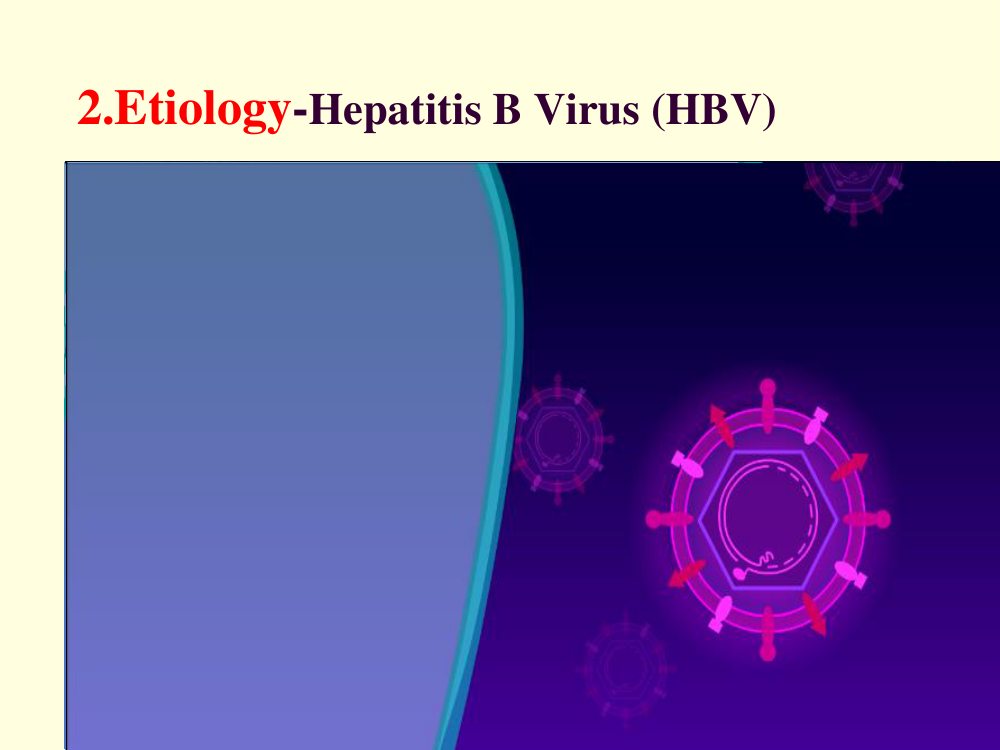
2. The five hepatotropic viruses
| Virus | Family / genome | Route | Chronicity | Vaccine | Notes |
|---|---|---|---|---|---|
| HAV | Picornavirus / ssRNA(+) | Faecal-oral (contaminated food/water) | None | ✅ Inactivated | Acute only; outbreaks from shellfish, school/day-care; children often asymptomatic |
| HBV | Hepadnavirus / partially dsDNA | Blood, sexual, perinatal (vertical) | Yes (~5–10% adult, 90% neonatal) | ✅ Recombinant HBsAg | Universal vaccination in China since 2002; HBV is oncogenic (hepatocellular carcinoma) |
| HCV | Flavivirus / ssRNA(+) | Blood (IVDU, transfusion pre-1990s, unsafe medical) | Yes (~75–85%) | ❌ | Treatable with DAAs (sofosbuvir ± velpatasvir ± glecaprevir/pibrentasvir) |
| HDV | Deltavirus / ssRNA(-) | Blood (requires co-infection with HBV) | Yes (worse prognosis) | HBV vaccine protects | "Delta agent" — incomplete virus, needs HBsAg envelope |
| HEV | Hepevirus / ssRNA(+) | Faecal-oral (zoonotic: pig, deer, shellfish) | Rare (except immunocompromised) | ✅ in China (recombinant) | High mortality in pregnancy (~20% in 3rd trimester) |
3. HBV — the centrepiece
Three antigen-antibody systems:
| Marker | What it means |
|---|---|
| HBsAg | Active infection (acute or chronic) — first to appear, persists in chronic |
| Anti-HBs | Immunity (recovery or vaccination) — only protective antibody |
| HBeAg | Active viral replication, high infectivity |
| Anti-HBe | Low replicative state (often with low viraemia) |
| Anti-HBc IgM | Recent/acute infection (window: HBsAg cleared, anti-HBs not yet up) |
| Anti-HBc IgG | Past or chronic infection (lifelong) |
| HBV DNA | Quantifies viraemia — guides treatment |
Serology interpretation cheat sheet:
| HBsAg | Anti-HBs | Anti-HBc | Interpretation |
|---|---|---|---|
| – | – | – | Never infected, vaccinate |
| – | + | – | Vaccinated (immune) |
| – | + | + | Resolved past infection (immune) |
| + | – | IgM+ | Acute HBV |
| + | – | IgG+ | Chronic HBV |
| – | – | IgM+ | "Window period" — acute HBV, HBsAg cleared but anti-HBs not yet up |
Natural history of chronic HBV:
- Immune-tolerant — HBeAg+, very high HBV DNA, normal ALT (young, perinatal infection)
- Immune-active (HBeAg+ chronic hepatitis) — HBeAg+, high HBV DNA, elevated ALT, liver inflammation
- Inactive carrier — HBeAg−, anti-HBe+, low HBV DNA, normal ALT
- HBeAg− chronic hepatitis — reactivation, HBV DNA intermediate, ALT elevated
- Resolved — HBsAg loss, anti-HBs appearance
Without treatment, ~15–25% of chronic HBV develop cirrhosis → HCC.
4. Pathogenesis and pathology (essentials)
- HAV/HEV: direct cytopathic injury (viral replication kills hepatocytes); inflammation predominantly portal and lobular; resolution on clearance.
- HBV/HCV/HDV: immune-mediated injury (CTL attack on infected hepatocytes); apoptosis, lobular disarray; chronic infection → fibrosis → cirrhosis.
- HDV superinfection of chronic HBV → accelerated severe hepatitis, fulminant risk ↑.
5. Clinical manifestation
Most acute hepatitis presents the same way — prodrome (fatigue, anorexia, nausea, RUQ discomfort, low-grade fever) → icteric phase (jaundice, dark urine, pale stool, pruritus) → convalescence (weeks to months).
Extra-hepatic features: HBV — polyarteritis nodosa, glomerulonephritis; HCV — cryoglobulinaemia, lichen planus, porphyria cutanea tarda; HEV in pregnancy — fulminant hepatic failure.
6. Laboratory tests
| Test | Use |
|---|---|
| ALT/AST | Hepatocellular injury (ALT > AST in viral hepatitis; AST > ALT in alcoholic) |
| Bilirubin (T/D), ALP, GGT | Cholestasis vs hepatocellular |
| PT/INR | Synthetic function (↑ = severe; coagulopathy is the bedside marker of acute liver failure) |
| Serology | Anti-HAV IgM, HBsAg/HBeAg/Anti-HBc, anti-HCV, anti-HEV IgM |
| HBV DNA / HCV RNA | Viraemia quantification |
| Liver biopsy / FibroScan | Staging chronic hepatitis (METAVIR, Ishak) |
7. Diagnosis
Combination of epidemiology + clinical + serology + viraemia. For acute hepatitis, the first test to order is the hepatitis serology panel (HBsAg, anti-HBc IgM, anti-HAV IgM, anti-HEV IgM, anti-HCV). For chronic disease — pair serology with viral load + liver function + imaging.
8. Treatment
| Virus | Acute | Chronic |
|---|---|---|
| HAV / HEV | Supportive only; HEV in pregnancy — consider ribavirin, deliver early | Self-limited |
| HBV | Supportive; antivirals not routinely indicated in acute | Entecavir / tenofovir (long-term, suppress viral load, prevent cirrhosis/HCC); peg-interferon-α (finite course, HBeAg seroconversion) |
| HCV | Supportive | Direct-acting antivirals (DAAs) — sofosbuvir/velpatasvir, glecaprevir/pibrentasvir — cure > 95% in 8–12 weeks |
| HDV | Supportive | Bulevirtide (HBV/HDV entry inhibitor) — limited access; peg-interferon-α |
Note on hepatoprotectors: glycyrrhizin (compound glycyrrhizin), bicyclol, silymarin — commonly used in China as adjuncts; evidence for ALT reduction, no clear effect on hard outcomes.
9. Prevention
- HAV/HEV: food/water hygiene; HAV vaccine (children, travellers); HEV vaccine (recombinant, approved in China since 2011).
- HBV: universal vaccination (China 2002) → HBsAg prevalence in children <1%. Post-exposure prophylaxis = HBIG + vaccine series within 7 days of needlestick. Mother-to-child: HBV DNA >2×10⁵ IU/mL → tenofovir in 3rd trimester + neonatal HBIG + vaccine.
- HCV: no vaccine; harm reduction (IVDU needle exchange), screen blood products (post-1990 China), screen at-risk populations (IVDU, MSM, dialysis).
- HDV: HBV vaccination protects indirectly.
- Notification: viral hepatitis is a Class B notifiable disease (24 h).
High-Yield Points
| Topic | Must-remember fact |
|---|---|
| HAV | Faecal-oral, no chronicity, outbreaks from contaminated shellfish/water |
| HBV | Chronicity risk inversely proportional to age at infection (90% neonatal, 5% adult) |
| HBV serology | HBsAg = active infection; Anti-HBs = only protective antibody |
| Window period | HBsAg−, anti-HBs−, anti-HBc IgM+ — between HBsAg clearing and anti-HBs rising |
| HCC | HBV and HCV both oncogenic; HCC surveillance = US + AFP every 6 months in chronic HBV/HCV cirrhosis |
| HDV | Only with HBV co/superinfection; worse prognosis |
| HEV | Pregnancy 3rd trimester mortality ~20% — high-yield! |
| HCV cure | DAAs >95% sustained virological response (cure) in 8–12 weeks |
| Treatment HBV chronic | Entecavir / tenofovir (long-term suppress); peg-interferon-α (finite, immunomodulator) |
| Post-exposure | Needlestick with HBV+ source → HBIG + vaccine series within 7 days |
Topic Summary
Viral hepatitis covers A–E. A and E are faecal-oral, acute, self-limited (with HEV being deadly in pregnancy). B, C, D are blood/sexual — B and C cause chronic disease and HCC; D piggybacks on B. HBV diagnosis is by serology panel (HBsAg, anti-HBs, HBeAg, anti-HBc IgM/G, HBV DNA); HCV by anti-HCV + HCV RNA. Treatment — acute is supportive; chronic HBV is long-term nucleoside analogue (entecavir/tenofovir); chronic HCV is cured with DAAs. Prevention — vaccines for A, B, E; harm reduction for C, D; food/water hygiene for A, E.
LMCHK OSCE Practice — Interpreting a Hepatitis B Serology Panel
Station setup: 28-year-old asymptomatic female attends for pre-employment health check. LFT normal. Serology returned:
| HBsAg | Anti-HBs | HBeAg | Anti-HBe | Anti-HBc |
|---|---|---|---|---|
| − | + | − | − | − |
She is anxious and asks what the result means.
Candidate tasks (5 min):
- Explain the result to her in plain language (Chinese or English) — vaccinated, not infected, no further action.
- Address her concern about future pregnancy (vertical transmission risk = 0 because she is not a carrier).
- State whether partner vaccination is recommended (yes, if partner unvaccinated).
Key marking cues:
- Recognises the pattern as isolated anti-HBs+ = post-vaccination, immune.
- Does not confuse with chronic HBV (which would be HBsAg+).
- Does not order unnecessary HBV DNA or repeat serology.
- Addresses reproductive concerns correctly (carrier status — not applicable).
Companion station — chronic HBV antenatal counselling:
A 30-year-old pregnant woman at 16 weeks, known chronic HBV (HBsAg+, HBeAg+, HBV DNA 5×10⁶ IU/mL).
- Plan: start tenofovir in 3rd trimester; ensure neonate receives HBIG within 12 h + HBV vaccine series.
- Breastfeeding is allowed if neonate receives HBIG + vaccine.
- Mode of delivery: vaginal delivery acceptable (no benefit from C-section to prevent transmission if prophylaxis given).
- Avoid: invasive procedures (scalp electrodes, forceps) that expose neonate to maternal blood.