Preparatory Mindset
Dengue is the world's most important mosquito-borne viral disease — 2 (CM exam tested).5 billion people at risk, ~100 endemic countries, and the leading cause of febrile illness in returning travellers from South-East Asia, the Caribbean, and South America. It is also the ID chapter with the most dangerous clinical pivot: most patients have a self-limited febrile illness, but a small proportion transit into severe dengue (DHF/DSS) around the time of defervescence, with plasma leak, shock, and bleeding. The exam mindset: fever + retro-orbital pain + rash + thrombocytopenia + warning signs → dengue → monitor closely around defervescence (days 3–7) → recognise plasma leak early. The clinical picture overlaps with chikungunya (more arthralgia, less plasma leak) and Zika (more conjunctivitis, neurologic risk in pregnancy) — always pair the travel history with the classic "breakbone" symptom complex.
Core Concepts
1. Definition
Dengue = a febrile illness caused by infection with one of four dengue viruses (DENV-1–4), transmitted by Aedes aegypti (primary) or Aedes albopictus (secondary) mosquitoes. Clinical spectrum ranges from asymptomatic infection to dengue fever (DF) to dengue haemorrhagic fever (DHF) to dengue shock syndrome (DSS).
2. Aetiology

| Feature | Detail |
|---|---|
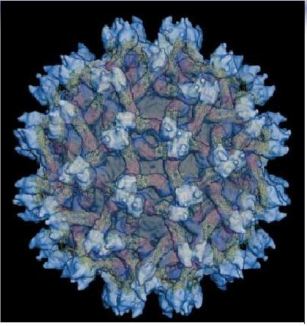
| Family | Flaviviridae (same family as yellow fever, Zika, West Nile, JEV) |
| Genome | Single-stranded, positive-sense RNA, ~11 kb |
| Structural proteins | C (capsid), prM, E (envelope) |
| Non-structural proteins | NS1, NS2a, NS2b, NS3, NS4a, NS4b, NS5 |
| Serotypes | 4 (DENV-1 to DENV-4) — DEN-2 more often associated with severe disease |
| Cross-immunity | Between the 4 serotypes (transient/heterotypic); partial with other flaviviruses |
| Stability | Heat-, acid-, UV-sensitive; inactivated 60 °C 30 min or 100 °C 2 min; stable at −20 °C for 5 years |
3. Epidemiology
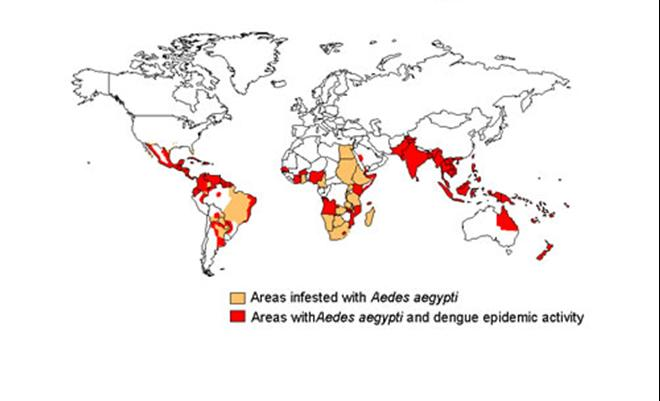
- Global: endemic throughout tropics/subtropics; >2.5 billion at risk; 100+ endemic countries; leading cause of febrile illness in returning travellers from the Caribbean, South America, South & South-East Asia.
- China history: not a "new" disease. After 1970s — repeated outbreaks in Hainan, Guangxi, Fujian, Zhejiang, Yunnan, Guangdong. From 1990s–2010s — sporadic outbreaks / imported cases. Incidence sharply up since 2012, peaking in 2014 (655,324 reported cases, 610 deaths in mainland China).
- Guangdong province is the most affected; first case 1978 in Foshan; large outbreaks in 2014 (45,171 cases in southern Guangdong).
4. Three links of the chain
- Source of infection: patients and subclinically infected persons (the only reservoir — no animal reservoir).
- Route of transmission: Aedes mosquito bite (*Aedes aegypti* primary, *Aedes albopictus* secondary). Day-biting mosquito, breeds in standing water (flower pots, tyres, water tanks). No person-to-person transmission.
- Susceptible population: non-immune to that serotype; secondary heterotypic infection carries a higher risk of severe dengue (antibody-dependent enhancement, ADE).
5. Pathogenesis
- Primary infection → robust neutralising antibody to that serotype (lifelong homotypic immunity).
- Secondary infection with a different serotype → sub-neutralising cross-reactive antibodies bind but do not neutralise → enhanced viral entry into monocytes/macrophages via FcγR → antibody-dependent enhancement (ADE) → higher viral load, exaggerated T-cell response, massive cytokine release (TNF-α, IL-6, IL-8) → endothelial damage, plasma leakage, consumptive coagulopathy.
- NS1 antigen directly damages endothelial glycocalyx → capillary leak.
- Hepatic involvement is common (mild-to-moderate transaminitis).
6. Clinical manifestations
Incubation: 3–14 days (usually 5–7).
Classic dengue fever (DF):
| Phase | Days | Hallmarks |
|---|---|---|
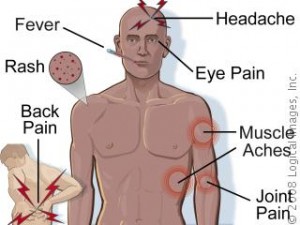
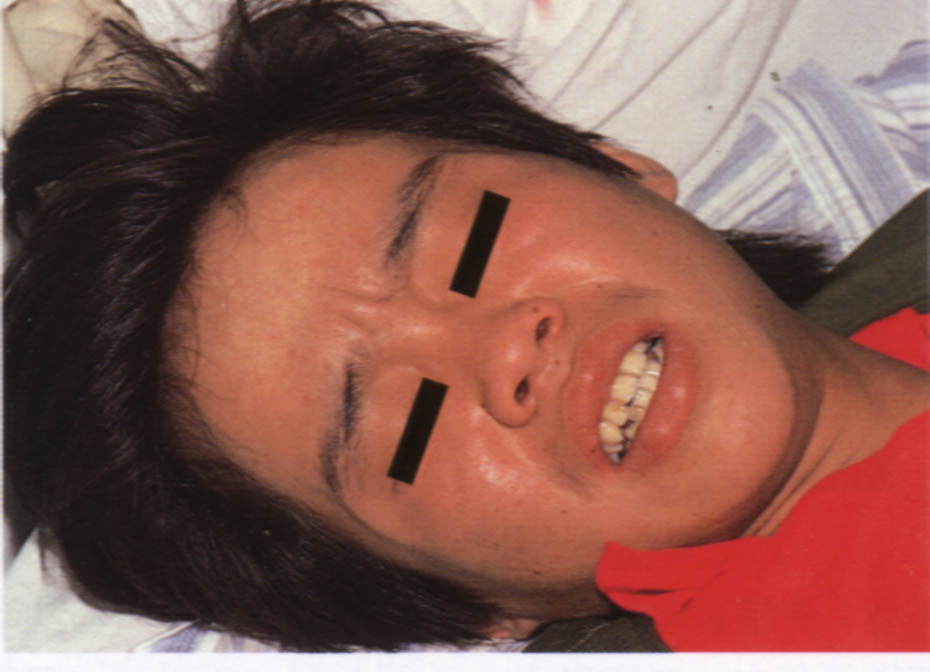
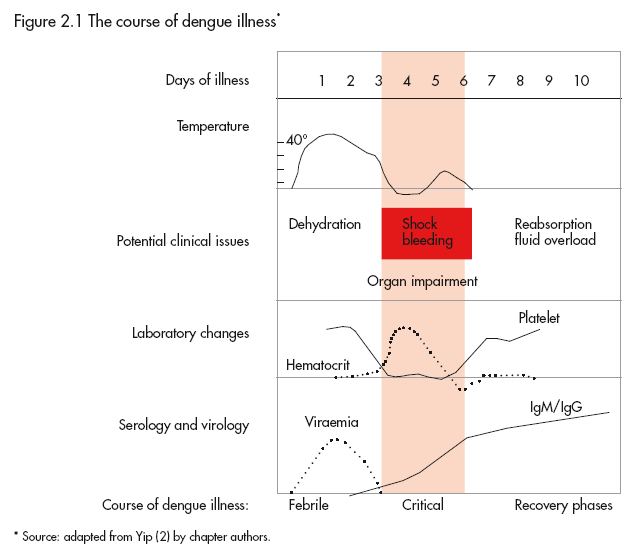
| Febrile phase | Days 0–3 (often 3–7) | Sudden high fever 39–40 °C; retro-orbital pain ("eyes hurt when I move them"); severe myalgia + arthralgia ("breakbone fever"); headache; maculopapular / scarlatiniform rash; nausea/vomiting; facial flushing; positive tourniquet test (≥10 petechiae per 2.5 cm²); may have mild haemorrhagic signs (petechiae, mucosal bleeding); thrombocytopenia begins |
| Critical phase (defervescence) | Days 3–7 | Fever defervesces around day 3–5 — this is when severe dengue often emerges; plasma leak (↑ haematocrit, pleural effusion, ascites, narrowed pulse pressure, shock); severe bleeding; organ involvement |
| Recovery phase | Days 7–10 | Plasma reabsorption, diuresis, convalescent rash (islands of white in red sea / petechiae with itching),恢复 general state, may have bradycardia |
7. WHO 2009 classification
| Old (1997) | New (WHO 2009) |
|---|---|
| DF / DHF / DSS | Dengue without warning signs / Dengue with warning signs / Severe dengue |
Severe dengue = any of:
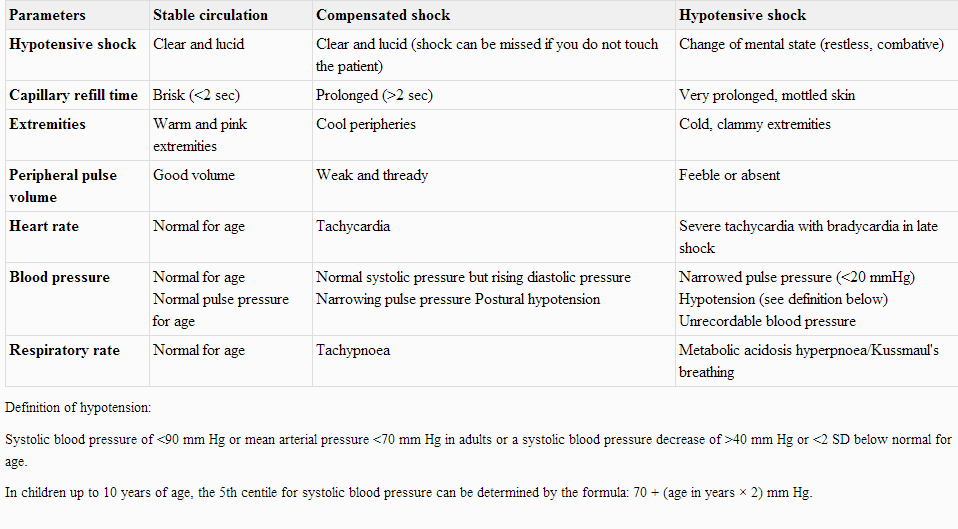
- Severe plasma leak → shock or respiratory distress
- Severe bleeding (per clinician judgment)
- Severe organ involvement: hepatic (AST/ALT ≥1000), CNS (encephalitis, seizures), cardiac, renal
Dengue warning signs (call for hospital admission + close monitoring):
- Abdominal pain / tenderness
- Persistent vomiting
- Clinical fluid accumulation (pleural effusion, ascites)
- Mucosal bleeding
- Lethargy / restlessness
- Liver enlargement >2 cm
- Increasing haematocrit with rapidly decreasing platelets
8. Laboratory examination
| Test | Pattern |
|---|---|
| CBC | ↓ WBC, ↓ platelets (often <100 × 10⁹/L in severe); ↑ haematocrit (haemoconcentration) = plasma leak |
| LFT | AST/ALT ↑ (often >ALT); AST ≥1000 = severe |
| Coagulation | PT/aPTT may be prolonged; fibrinogen ↓ in severe |
| Specific diagnosis | NS1 antigen (early, days 1–5) — best early test; dengue IgM (days 5–7 onwards); IgG (paired sera 4-fold rise = recent infection); RT-PCR (early, research/typing); virus isolation (research) |
| Tourniquet test | Inflate BP cuff midway between SBP and DBP for 5 min; ≥10 petechiae/2.5 cm² = positive (capillary fragility) |
> Diagnostic window: NS1 (days 1–5) → IgM (days 5–7+) → IgG seroconversion (paired sera, 2 weeks apart for secondary infection).
9. Treatment
No specific antiviral. Supportive, cautious fluid management is the key:
| Setting | Management |
|---|---|
| Without warning signs, tolerating PO | Outpatient: paracetamol (NOT aspirin/NSAIDs — bleeding risk), oral rehydration, daily review for warning signs |
| With warning signs | Admit; IV crystalloid (isotonic) 5–7 mL/kg/h for 1–2 h, then taper based on clinical + Hct; monitor Hct q4–6 h, urine output, vitals |
| Severe dengue / shock | Aggressive crystalloid (10–20 mL/kg bolus over 15–30 min); reassess; if unstable → colloid; avoid fluid overload (plasma reabsorption phase will start days 7–10); blood transfusion if severe bleeding or refractory shock |
| Severe bleeding | Platelet transfusion if platelets <20 × 10⁹/L with active bleeding or <10 × 10⁹/L prophylactically (controversial); fresh frozen plasma for coagulopathy; avoid prophylactic platelet transfusion if not bleeding |
| Adjuncts | Avoid aspirin/NSAIDs, IM injections, anticoagulants; do not give prophylactic antibiotics unless secondary bacterial infection suspected |
Avoid these mistakes:
- Aggressive IV fluids in the recovery phase → pulmonary oedema (plasma reabsorption).
- Discharging too early in the critical phase → miss shock.
- Treating fever with aspirin → bleeding.
10. Prevention
- Vaccine: Dengvaxia (CYD-TDV) — live attenuated tetravalent, licensed for ages 9–16 with laboratory-confirmed prior dengue infection (WHO 2018 conditional recommendation; seronegative recipients have higher severe dengue risk on subsequent infection due to ADE).
- Vector control: eliminate standing water (cover tanks, change water in flower vases weekly, clear tyres); larvicides (temephos in water containers); adulticidal space sprays during outbreaks.
- Personal protection: long sleeves, mosquito repellents (DEET ≥20%), bed nets (Aedes bites during day).
- Notification: Class B notifiable disease (24 h).
High-Yield Points
| Topic | Must-remember |
|---|---|
| Pathogen | Flavivirus, ssRNA(+), 4 serotypes (DENV-1–4) |
| Vector | Aedes aegypti (primary), *Ae. albopictus* (secondary); day-biting |
| Critical phase | Defervescence (days 3–7) — when severe dengue emerges |
| Severe dengue triad | Severe plasma leak → shock; severe bleeding; severe organ involvement (AST/ALT ≥1000, CNS, cardiac) |
| Warning signs | Abdominal pain, persistent vomiting, fluid accumulation, mucosal bleeding, lethargy, liver enlargement >2 cm, ↑ Hct + ↓ platelets |
| Diagnosis | NS1 antigen (early); IgM from day 5–7; paired IgG for secondary infection |
| Tourniquet test | ≥10 petechiae per 2.5 cm² after 5 min cuff = positive |
| Fluid management | Cautious crystalloid; monitor Hct and urine output; avoid overload in recovery phase |
| Aspirin | Avoid — bleeding risk |
| Vaccine | Dengvaxia — only for seropositive 9–16-year-olds (WHO) |
| Heterotypic immunity | ADE — secondary infection with different serotype ↑ severe dengue risk |
Topic Summary
Dengue is a flavivirus with 4 serotypes, transmitted by day-biting Aedes mosquitoes, with a clinical spectrum from asymptomatic to life-threatening shock. The classic triad is fever + retro-orbital pain + severe myalgia/arthralgia, with thrombocytopenia and a positive tourniquet test. The dangerous pivot is at defervescence (days 3–7), when severe dengue emerges with plasma leak and shock — recognise warning signs early. Diagnosis: NS1 antigen (early), IgM/IgG serology (later). Treatment: supportive, cautious fluid management, paracetamol only. Prevention: vector control (eliminate standing water) and personal protection; Dengvaxia only for seropositive individuals due to ADE risk.
LMCHK OSCE Practice — Returning Traveller with Fever and Rash
Station setup: 27-year-old female returned from Phuket 5 days ago; now day 5 of fever to 39.5 °C with rigors, severe headache, retro-orbital pain, generalised myalgia, and a macular rash on the trunk. She took ibuprofen for fever. Examination: T 39 °C, HR 100, BP 100/70, SpO₂ 99%. Positive tourniquet test (>15 petechiae). Labs (verbal): WBC 2.8 × 10⁹/L, platelets 75 × 10⁹/L, Hct 48% (elevated), AST 180, ALT 120.
Candidate tasks (8 min):
- Take a focused travel and exposure history (mosquito nets, repellent, duration, prophylactic measures).
- State the most likely diagnosis (dengue) and explain the basis.
- List the first 3 investigations and the single most important (NS1 antigen within day 5).
- Classify the patient on the WHO 2009 scheme (currently "dengue with warning signs" — thrombocytopenia + rising Hct; close to severe given Hct 48%).
- Outline immediate management (stop ibuprofen → paracetamol; admit for IV crystalloid at maintenance; monitor Hct q4–6h; avoid aspirin/NSAIDs).
- Explain the critical-phase risk to the patient (defervescence = when shock can emerge).
Key marking cues:
- Recognises classic dengue (travel + retro-orbital pain + myalgia + rash + thrombocytopenia + positive tourniquet).
- NS1 antigen as the most useful first test in the first 5 days.
- Recognises warning signs + elevated Hct = dengue with warning signs, needs admission.
- Avoids aspirin/NSAIDs (switch to paracetamol).
- Counsels on critical phase around defervescence and what to watch for (abdominal pain, persistent vomiting, cold extremities, reduced urine output).