Preparatory Mindset
Cholera is the archetypal "disease of inequity" — an ancient, completely preventable disease that still kills ~100,000 people/year, mostly children in conflict zones and灾后 settings (CM exam tested). It is the purest model of secretory diarrhoea: the cholera toxin permanently activates adenylate cyclase → rushing rivers of rice-water stool → isotonic dehydration with hypokalaemia and metabolic acidosis → hypovolaemic shock → death within hours if untreated. The exam mindset: acute watery diarrhoea ("rice-water stool") + rapid dehydration + endemic / outbreak setting → think cholera → stool culture on TCBS agar + ORS (or IV Ringer's lactate) is the cornerstone of treatment. Antibiotics (doxycycline or azithromycin) shorten the course; vaccine (oral killed cholera vaccine, Dukoral/Euvichol) is for prevention in endemic areas and outbreak control.
Core Concepts
1. Definition
Cholera = an acute intestinal infection caused by toxigenic *Vibrio cholerae* serogroups O1 and O139, characterised by massive watery diarrhoea ("rice-water stool") leading to rapid dehydration, electrolyte loss, hypovolaemic shock, and death within hours if untreated.
2. Aetiology
| Feature | Detail |
|---|---|
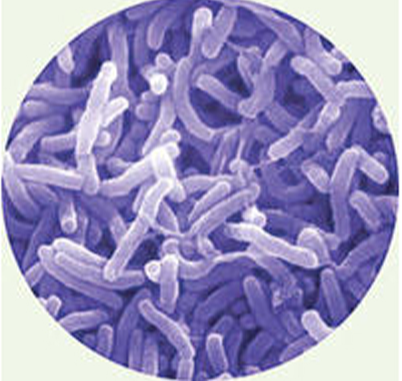
| Pathogen | *Vibrio cholerae* — Gram-negative, comma-shaped, single polar flagellum |
| Serogroups | O1 (classical + El Tor biotypes; Ogawa, Inaba, Hikojima serotypes) → most epidemics; O139 Bengal → emerged 1992 in Bay of Bengal, now contained |
| Toxin | Cholera enterotoxin (CT, choleragen) — AB₅ subunit toxin; A subunit ADP-ribosylates Gsα → permanent activation of adenylate cyclase → massive cAMP → Cl⁻ + HCO₃⁻ + H₂O secretion |
| Other toxins | ZOT, ACE (less important) |
| Stability | Sensitive to acid, heat, drying; survives in cold water/sea water for days–weeks |

3. Pathogenesis
| Step | Mechanism |
|---|---|
| 1. Ingestion | Vibrios survive gastric acid (need high inoculum ~10⁸–10¹⁰ in healthy adults; lower in hypochlorhydria) |
| 2. Adherence | Pass through mucus layer → adhere to small intestinal epithelium (non-invasive) |
| 3. Toxin action | CT A subunit → ↑cAMP → activation of CFTR → massive secretion of Cl⁻, HCO₃⁻, Na⁺, K⁺, H₂O into lumen |
| 4. Diarrhoea | Up to 1 L/h of isotonic fluid; stool is isotonic with Na⁺ ~135, K⁺ ~15, Cl⁻ ~100, HCO₃⁻ ~45 mmol/L — high K⁺ and HCO₃⁻ loss → hypokalaemia + metabolic acidosis |
| 5. Volume loss | Hypovolaemia → ↓BP, ↓renal perfusion → AKI; lactic acidosis; circulatory collapse |
> The cholera stool electrolyte table (mmol/L): Na 135 / K 15 / Cl 100 / HCO₃ 45 vs plasma Na 136-138 / K 5 / Cl 98-106 / HCO₃ 24 → explains why ORS needs more K⁺ and base than normal saline.
4. Epidemiology
- 7 pandemics since 1817. The 7th pandemic (1961–present) is El Tor biotype — more asymptomatic carriage, longer survival in environment, explosive but slower outbreaks than classical.
- Geographic distribution: riverine + coastal areas (especially Bay of Bengal, sub-Saharan Africa, Haiti after 2010 earthquake).
- Two patterns: explosive outbreaks (point source, e.g., contaminated water) and protracted sporadic cases (endemic focus).
- Transmission: contaminated water (main); contaminated food (especially seafood, raw vegetables irrigated with sewage); person-to-person (rare).
- Population susceptibility: universal (no cross-immunity between O1 / non-O1 / O139).
- Spread: coastal first → inland; consistent with El Tor biotype behaviour.
5. Three links of the chain
- Source: patient (acute) and convalescent carrier (especially El Tor, who can shed for weeks); rarely chronic biliary carrier.
- Route: faecal-oral via contaminated water (most important); food (raw shellfish, fruit/vegetables washed in contaminated water); rarely person-to-person.
- Susceptible: everyone (no prior immunity except past infection / vaccination).
6. Clinical features
Incubation: hours to 5 days (usually 1–2 days).
~75% asymptomatic; ~20% mild; ~5% severe classic cholera.
| Stage | Features |
|---|---|
| Diarrhoea + vomiting phase | Sudden painless watery diarrhoea (no tenesmus, no blood/mucus); rice-water stool (white, watery, flecks of mucus, mild fishy odour); vomiting often follows |
| Dehydration phase | Rapid: sunken eyes, dry mucous membranes, loss of skin turgor, tachycardia, hypotension, washerwoman's hands (wrinkled), hoarse voice ("cholera voice"), muscle cramps; in severe — anuria, shock, coma |
| Convalescence | With proper rehydration, symptoms resolve within hours; reactive hypoglycaemia in children can complicate recovery |
Dehydration severity (WHO classification):
| Grade | Signs |
|---|---|
| None | <5% loss of body weight |
| Some | 5–10% loss; thirst, restlessness, sunken eyes, ↓ skin turgor |
| Severe | >10% loss; lethargy/unconsciousness, very sunken eyes, very ↓ skin turgor, unable to drink, rapid pulse, low BP |
7. Complications
- Acute renal failure (pre-renal + ischaemic ATN).
- Hypokalaemia → arrhythmia, muscle weakness.
- Metabolic acidosis (bicarbonate loss + lactic acidosis + AKI).
- Hypoglycaemia (especially children).
- Abortion in pregnancy (severe dehydration + acidosis).
- Pneumonia / aspiration in comatose patients.
8. Laboratory examination
| Test | Detail |
|---|---|
| Stool — gross | Rice-water stool; odour mildly fishy; alkaline pH |
| Stool microscopy | Few cells; comma-shaped motile vibrios on dark-field |
| Stool culture | Thiosulfate citrate bile salt sucrose (TCBS) agar — yellow colonies (O1/O139); further serotyping with O1 / O139 antisera |
| Stool PCR | Rapid, sensitive; detects toxin genes |
| Rapid dipstick | O1/O139 antigen detection — for outbreak field use |
| Blood | ↑ Hct (haemoconcentration), ↑ BUN/Cr (prerenal AKI), hypokalaemia, metabolic acidosis (low HCO₃⁻, high anion gap) |
9. Diagnosis
Clinical diagnosis in endemic/outbreak settings is straightforward: acute watery diarrhoea + rapid dehydration in someone from a cholera-affected area. Confirm with stool culture on TCBS + serotyping.
10. Treatment
Cornerstone: aggressive fluid resuscitation — most deaths are from dehydration, not the infection itself.
| Setting | Regimen |
|---|---|
| Some dehydration | ORS (oral rehydration salts) — start 75 mL/kg in first 4 h; continue replacing ongoing losses |
| Severe dehydration | IV Ringer's lactate (preferred) — 100 mL/kg over 3 h (children) or 4–6 h (adults); then ORS when tolerating oral; add KCl 10–20 mmol/L to each litre of IV if hypokalaemic |
| Antibiotics (shorten illness + reduce shedding) | Doxycycline 300 mg single dose (O1, sensitive areas); azithromycin 1 g single dose (O139, paediatric, pregnancy); ciprofloxacin (resistance varies by region) |
| Zinc supplementation | Children <5 — 10–20 mg/day × 10–14 days reduces severity and recurrence |
| Diet | Resume early feeding (incl. breastfeeding) |
| Avoid | Antidiarrhoeal drugs (loperamide, opioids), antibiotics in mild cases |
WHO ORS composition (per L water): NaCl 2.6 g / NaHCO₃ 1.5 g (or trisodium citrate 2.9 g) / KCl 1.5 g / glucose 13.5 g (osmolarity ~245 mOsm/L). Low-osmolarity ORS is preferred (less osmotic diarrhoea, better fluid absorption).

11. Prevention
- Dukoral (killed V. cholerae O1 + CT B subunit) — 2 doses, 2 weeks apart; ~65–85% efficacy for 2 years. - Euvichol / Shanchol (killed O1 + O139, no B subunit) — WHO-prequalified; widely used in mass vaccination campaigns during outbreaks.
- Safe water — chlorination, boiling, point-of-use filtration; protected water sources.
- Sanitation — sewage disposal, latrines, hand-washing with soap.
- Food hygiene — cook seafood thoroughly; peel fruit; avoid raw vegetables in endemic areas unless washed in safe water; funeral feast caution.
- Oral cholera vaccine (OCV):
- Antibiotic chemoprophylaxis for household contacts — doxycycline single dose (mass chemoprophylaxis is generally not recommended — favours resistance).
- Notification: Class A notifiable disease (2 h, the highest urgency) in China.
High-Yield Points
| Topic | Must-remember |
|---|---|
| Pathogen | *Vibrio cholerae* O1 (El Tor biotype — current 7th pandemic) and O139 |
| Toxin | CT (choleragen) AB₅; ADP-ribosylates Gsα → ↑cAMP → Cl⁻/HCO₃⁻/H₂O secretion |
| Stool | Rice-water, isotonic, high K⁺ (15) + HCO₃⁻ (45) mmol/L |
| Dehydration | "Some" = 5–10% loss; "Severe" = >10% loss |
| Diagnosis | TCBS agar culture + O1/O139 serotype; rapid dipstick for outbreak |
| Treatment cornerstone | Aggressive rehydration: IV Ringer's lactate for severe; ORS for mild + ongoing losses |
| Antibiotic | Doxycycline 300 mg single dose (azithromycin for O139, paediatric, pregnancy) |
| Children <5 | Zinc 10–20 mg/day × 10–14 days |
| Vaccine | Dukoral / Euvichol (OCV) — 2 doses; ~65–85% efficacy |
| Notification | Class A (2 h) — highest urgency |
| Avoid | Loperamide / antidiarrhoeals |
Topic Summary
Cholera is massive secretory diarrhoea from cholera toxin activating adenylate cyclase → rice-water stool with K⁺/HCO₃⁻ loss → rapid isotonic dehydration + metabolic acidosis. Treat with aggressive rehydration (IV Ringer's lactate for severe; ORS for mild + ongoing) — most deaths are from dehydration, not the bacterium. Single-dose doxycycline (azithromycin for O139, paediatric, pregnancy) shortens illness and shedding; zinc in children <5. Prevention: safe water, sanitation, food hygiene, OCV vaccine (Dukoral/Euvichol). Class A notifiable disease (2 h) — highest urgency.
LMCHK OSCE Practice — Refugee Camp Outbreak Triage
Station setup: A 32-year-old woman presents to a refugee camp clinic with 8-hour history of painless profuse watery diarrhoea (10+ large-volume stools) and 3 episodes of vomiting. She is weak and thirsty. Examination: T 37 °C, HR 130, BP 80/50, sunken eyes, very ↓ skin turgor, dry mouth, no urine for 4 h. Surrounding camp has multiple similar cases.
Candidate tasks (8 min):
- State the most likely diagnosis (cholera — outbreak + rice-water stool + rapid dehydration + hypotension).
- Assess the dehydration severity (severe: >10% loss — sunken eyes, very ↓ turgor, unable to drink, tachycardia, hypotension, anuria).
- Outline immediate management — start IV Ringer's lactate 100 mL/kg over 3–6 h; add KCl to each litre when available; switch to ORS when tolerating oral; single-dose doxycycline 300 mg (pregnancy test if unsure); zinc if available; refeed early.
- Discuss outbreak control — safe water (chlorination, point-of-use), sanitation, hand-washing, OCV mass vaccination, isolation of cases, notification (Class A, 2 h).
- Explain to the patient and family that most deaths are from dehydration, not the bacteria — proper rehydration gives >99% survival.
Key marking cues:
- Recognises cholera from clinical + outbreak setting.
- Classifies severe dehydration correctly.
- Starts IV fluids immediately (Ringer's lactate, not normal saline alone — needs HCO₃⁻ and K⁺).
- Adds antibiotic + zinc (children).
- Initiates outbreak control (water + sanitation + OCV + notification).