Preparatory Mindset
Malaria is the most important parasitic disease of humans — ~250 million cases and ~600,000 deaths globally (WHO 2023), with >95% of deaths from *Plasmodium falciparum* (CM exam tested). In China, the "1-3-7" surveillance target (report cases within 1 day, confirm within 3 days, implement control measures within 7 days) and the 2021 elimination certification by WHO from malaria-endemic status make this chapter both historical-success and ongoing-clinic (imported cases, relapses). The exam mindset: fever + travel / Anopheles exposure + paroxysmal rigors + splenomegaly → think malaria → thick + thin blood film is the universal diagnostic test. The dangerous species is falciparum (cerebral malaria, severe anaemia, ARDS, AKI, hypoglycaemia) — any patient returning from a falciparum-endemic area with a fever is an emergency until proven otherwise. China-discovered artemisinin (Tu Youyou, Nobel 2015) is the backbone of modern treatment.
Core Concepts
1. Definition
Malaria = a mosquito-borne parasitic infection of red blood cells by Plasmodium species, transmitted by the bite of female Anopheles mosquitoes, presenting with paroxysmal fever, chills, sweats, splenomegaly, and (in *falciparum*) severe complications (cerebral malaria, severe anaemia, organ failure).
2. Aetiology — Plasmodium species
| Species | Distribution | Erythrocytic cycle | Severity | Relapse (hypnozoite) |
|---|---|---|---|---|
| *P. falciparum* | Tropical Africa, SE Asia, S America | 36–48 h | Most severe (cerebral, ARDS, AKI); main cause of death | No |
| *P. vivax* | Asia, Latin America, some Africa | 48 h (tertian) | Moderate; relapse | Yes (hypnozoites in liver) |
| *P. ovale* | West Africa | 48 h (tertian) | Mildest | Yes |
| *P. malariae* | Worldwide | 72 h (quartan) | Mild; chronic nephropathy | No |
| *P. knowlesi* | SE Asia (Malaysia) | 24 h | Severe (simian) | No |
3. Vector
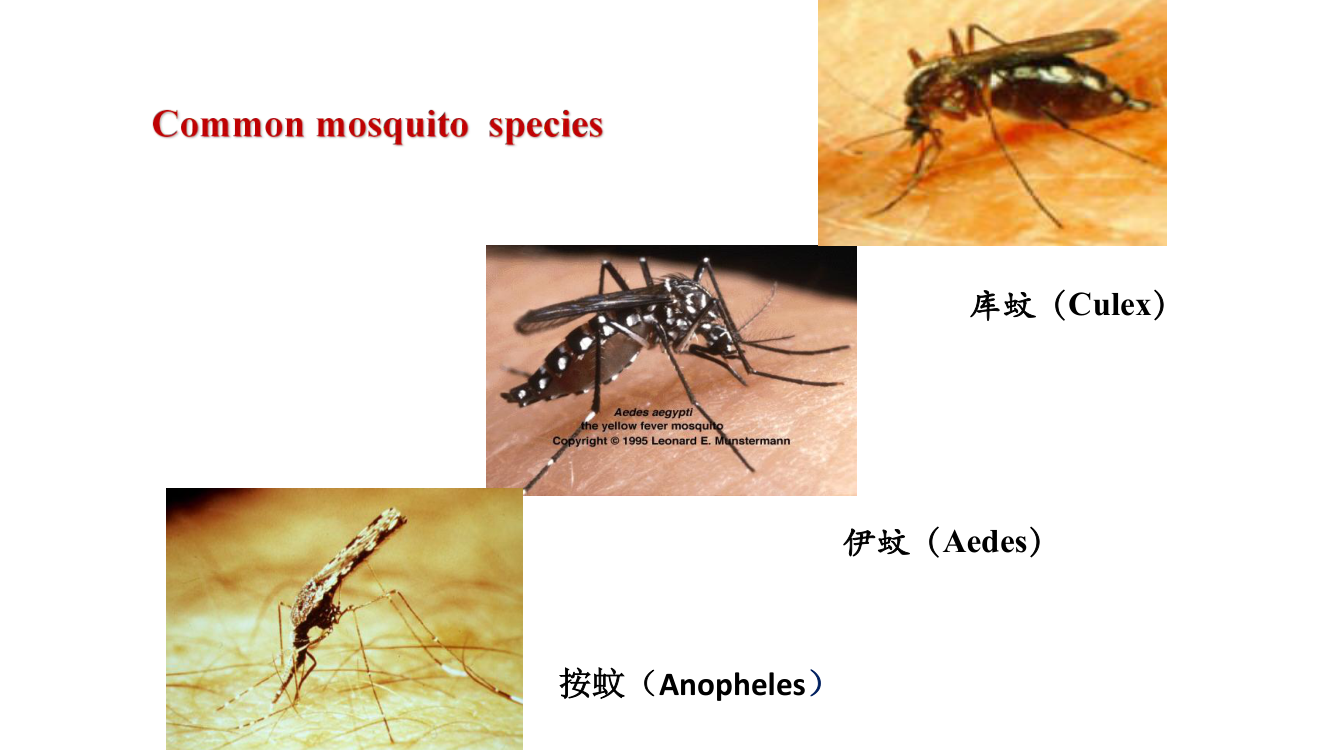
Anopheles mosquito — only the female feeds on blood; breeds in clean still water; bites dusk-to-dawn (peak 9 pm–4 am); rests at 45° to surface (vs Culex parallel, Aedes angled but with stripes).
4. Life cycle (in human)
| Stage | Where | What |
|---|---|---|
| Sporozoite | Injected by mosquito → blood | Travel to liver in minutes |
| Liver stage (exo-erythrocytic) | Hepatocytes | Asexual replication → merozoites (1–2 weeks) |
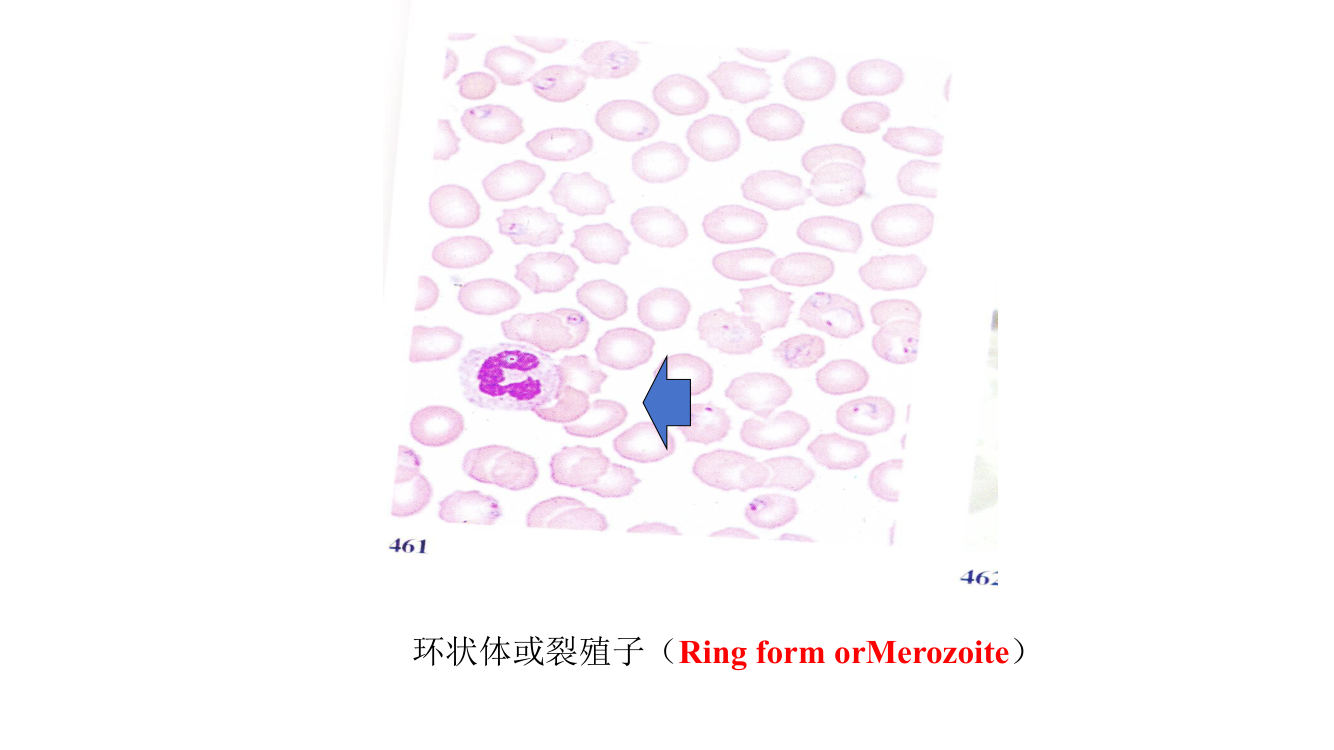
| Merozoite | Released → blood | Invade RBCs → ring form trophozoite → trophozoite → schizont → merozoites (cycle) |
| Gametocyte | Blood | After 3–6 cycles; taken up by mosquito → sexual reproduction (ookinete → oocyst → sporozoite) |
| Hypnozoite (vivax/ovale only) | Liver | Dormant; causes relapse weeks–months later |
5. Diagnosis — blood film
| Test | Detail |
|---|---|
| Thick blood film | Sensitivity high; species identification harder; first-line screening |
| Thin blood film | Species identification + parasite quantification (parasites/μL or % parasitaemia) |
| Rapid diagnostic test (RDT) | Detects *P. falciparum* HRP-2 + pan-malaria LDH antigen; useful when microscopy unavailable |
| PCR | Most sensitive; species confirmation; not for acute care |
| When | Draw during or immediately after the fever paroxysm; if first film negative but suspicion high, repeat every 12–24 h × 3 |
> China "1-3-7" target: case report within 1 day, lab confirmation within 3 days, foci investigation + control within 7 days.
6. Clinical features
Classic paroxysm (tertian / quartan pattern) in vivax / malariae:
| Stage | Duration | Features |
|---|---|---|
| Cold (chilling) | 20 min–1 h | Shaking rigors, malaise, headache, vomiting |
| Hot | 2–6 h | T 39–41 °C, hot/dry skin, tachycardia, headache, backache |
| Sweating | 30 min–1 h | Diaphoresis, defervescence, fatigue |
Periodicity: vivax/ovale = every 48 h (tertian); malariae = every 72 h (quartan); falciparum = irregular / 36–48 h, often continuous.
Common features (all species): fever, chills, sweats, headache, nausea/vomiting, body aches, malaise; splenomegaly; hepatomegaly more common in falciparum.
Falciparum red flags (severe malaria):
| Complication | Features |
|---|---|
| Cerebral malaria | Confusion, seizures, coma (GCS <11); retinal changes; most urgent, treat empirically if suspected |
| Severe anaemia | Hb <5 g/dL (or Hct <15%) with parasitaemia |
| Acute kidney injury | ↑ Cr, oliguria; blackwater fever (intravascular haemolysis) |
| ARDS | Acute dyspnoea, bilateral infiltrates |
| Hypoglycaemia | Common in pregnancy + quinine/quinidine treatment |
| Metabolic acidosis | Lactate >5 mmol/L |
| Hyperparasitaemia | >2% RBCs parasitised (or >5% in non-immune) |
7. Treatment
Decision tree — depends on (a) species, (b) severity, (c) drug resistance area, (d) available drugs.
| Regimen | Use |
|---|---|
| Artemisinin-based combination therapy (ACT) — first-line for uncomplicated falciparum | Artemether + lumefantrine; dihydroartemisinin + piperaquine (DHA-PPQ); artesunate + amodiaquine; artesunate + mefloquine |
| Severe / complicated falciparum | IV artesunate 2.4 mg/kg at 0, 12, 24 h, then daily × max 7 days (WHO first-line; replaces quinine) → oral ACT when tolerating |
| Vivax / ovale uncomplicated | Chloroquine (sensitive areas) + primaquine 14 days (or tafenoquine single dose — G6PD-tested first) to eradicate hypnozoites and prevent relapse |
| Malariae / knowlesi | Chloroquine or ACT |
| Pregnancy (1st trimester) | Quinine + clindamycin (avoid artemisinins in 1st trimester if alternatives available; WHO 2022+ allows ACT in all trimesters); IV artesunate for severe |
| Prophylaxis (travellers) | Doxycycline, atovaquone-proguanil, mefloquine, tafenoquine (all start before travel and continue after return) |
Adjuncts in severe malaria:
- Antipyretics (paracetamol), cooling.
- IV fluids cautiously (overload risk).
- Blood transfusion if severe anaemia.
- Haemodialysis for AKI.
- Glucose monitoring + dextrose for hypoglycaemia.
- Anticonvulsants for seizures.
- Exchange transfusion no longer routine — only in select centres.
- Avoid: corticosteroids (no benefit, may harm), heparin for DIC (controversial).
> Critical pearl: *P. vivax* and *P. ovale* require primaquine (or tafenoquine) for 14 days to clear liver hypnozoites and prevent relapse. Screen G6PD deficiency first — primaquine causes haemolysis in G6PD-deficient patients.
8. Prevention
- Vector control: insecticide-treated bed nets (ITN) (most cost-effective), indoor residual spraying, larval source management.
- Chemoprophylaxis for travellers to endemic areas (see above).
- Vaccine: RTS,S/AS01 (Mosquirix) — for *P. falciparum* in children ≥5 months in moderate-to-high transmission Africa (WHO 2021); R21/Matrix-M — higher efficacy, approved 2023 (WHO).
- Pregnancy: intermittent preventive treatment (IPTp) with sulfadoxine-pyrimethamine (SP) in moderate-transmission Africa.
- China: elimination certified 2021; ongoing surveillance of imported cases; maintain capacity to prevent re-establishment.
High-Yield Points
| Topic | Must-remember |
|---|---|
| Pathogen | *P. falciparum* (most lethal), *P. vivax* (relapse), *P. ovale* (relapse), *P. malariae* (quartan), *P. knowlesi* (24 h) |
| Vector | Female Anopheles; night-biting |
| Diagnosis | Thick + thin blood film; draw during fever paroxysm |
| Falcon red flag | Severe falciparum = cerebral malaria / ARDS / AKI / severe anaemia / hypoglycaemia / acidosis / hyperparasitaemia |
| Treatment uncomplicated | ACT (artemether-lumefantrine, DHA-PPQ, etc.) |
| Treatment severe | IV artesunate (2.4 mg/kg at 0/12/24 h then daily) |
| Vivax/ovale radical cure | Primaquine × 14 d (or tafenoquine) — G6PD screen first |
| Hypnozoite | Liver dormant stage of vivax/ovale → relapse |
| Quinine vs artemisinin | Artemisinins first-line; quinine for 1st-trimester pregnancy + severe malaria adjunct |
| Artemisinin | Tu Youyou discovered, Nobel 2015 |
| Vaccine | RTS,S/AS01 (Mosquirix) + R21/Matrix-M — paediatric falciparum in Africa |
| Prevention | ITN (bed nets) + indoor spraying + IPT in pregnancy |
| China | "1-3-7" surveillance target; elimination certified 2021 |
Topic Summary
Malaria is a mosquito-borne Plasmodium infection of RBCs, transmitted by female Anopheles; falciparum is the killer, vivax/ovale cause relapse via hypnozoites. The classic paroxysm is cold → hot → sweating; periodicity helps species ID (tertian / quartan / irregular). Blood film (thick + thin) during a paroxysm is the universal diagnostic test. Severe falciparum = medical emergency; treat with IV artesunate. Uncomplicated = ACT first-line. Vivax/ovale require primaquine to eradicate hypnozoites (G6PD screen first). Prevention: bed nets, indoor spraying, IPT, traveller chemoprophylaxis, paediatric vaccine in Africa. China eliminated malaria in 2021 but maintains surveillance.
LMCHK OSCE Practice — Returning Traveller with Fever
Station setup: 28-year-old male returned from rural Mozambique 2 weeks ago (no prophylaxis). Now 4-day history of fever with rigors, sweats, headache, myalgia. Examination: T 39.5 °C, HR 110, BP 105/70, scleral icterus, soft splenomegaly 3 cm.
Candidate tasks (8 min):
- Take a focused travel + prophylaxis + exposure history (duration, rural/urban, prophylaxis, bed nets, prior malaria).
- State the most likely diagnosis and the species most likely to cause severe disease.
- List the first-line investigations — thick + thin blood film (urgent, during fever); malaria RDT; FBC (Hb, platelets), LFT, renal function, glucose, blood culture, parasite quantification if positive.
- Discuss immediate management — admit; IV artesunate 2.4 mg/kg at 0/12/24 h if severe; monitor glucose, Hb, urine output; notify.
- Discuss chemoprophylaxis advice for future travel (doxycycline, atovaquone-proguanil, mefloquine).
Key marking cues:
- Recognises falciparum malaria as the emergency; never delay treatment for travel history completeness.
- Blood film during fever (or immediately after) is the test of choice.
- If severe (parasite >2%, organ dysfunction, Hb <5) → IV artesunate + supportive care.
- Plans G6PD screen before primaquine (only if vivax/ovale confirmed).
- Notification (Class B notifiable disease) + contact tracing if locally acquired.