Preparatory Mindset
Fever, edema, and weight loss are three of the most common "general symptoms" that cross every specialty boundary. For each, master: definition, etiology, clinical manifestations, history-taking points, and diagnostic thinking (common causes first). Remember that these symptoms are the presenting face of infections, malignancies, connective tissue diseases, and organ failure — a systematic approach is what separates a good clinician from a symptom-chaser.
Illustrations(图解速览)
Core Concepts — Fever (发热)
Definition and Pathogenesis
- Pyrogenic fever: exogenous pyrogens (bacteria/endotoxins, viruses, fungi, inflammatory products, necrotic tissue, antigen-antibody complexes) → activate neutrophils/monocytes/macrophages → release endogenous pyrogens (IL-1, TNF, IFN) → act on preoptic anterior hypothalamus (POAH) → set point ↑ - Non-pyrogenic fever: direct damage to thermoregulatory center (brain tumor, hemorrhage), increased heat production (hyperthyroidism, epilepsy), or decreased heat loss (heart failure, extensive skin lesions)
- Fever (pyrexia): elevation of body temperature above normal caused by resetting of the thermoregulatory center (hypothalamus set point ↑).
- Hyperthermia: disturbance of thermal regulatory control — excess heat production, decreased dissipation, or loss of regulation (NO elevated set point, NO pyrogen).
- Two mechanisms:
Normal Temperature Measurement
| Site | Range | Time | Notes |
|---|---|---|---|
| Axillary (腋测) | 36–37℃ | 10 min | Most common in China, convenient/safe |
| Oral | 36.3–37.2℃ | 5 min | Not for infants/unconscious patients |
| Rectal | 36.5–37.7℃ | 5 min | Most stable, for infants/unconscious |
- Daily fluctuation <1℃; T rises in afternoon, after exercise, during ovulation/pregnancy; elderly lower baseline
- T↑ 1℃ → HR↑ 10–20 bpm, R↑ 4 cycles/min
Degree of Fever (Oral Standard)
| Degree | Range |
|---|---|
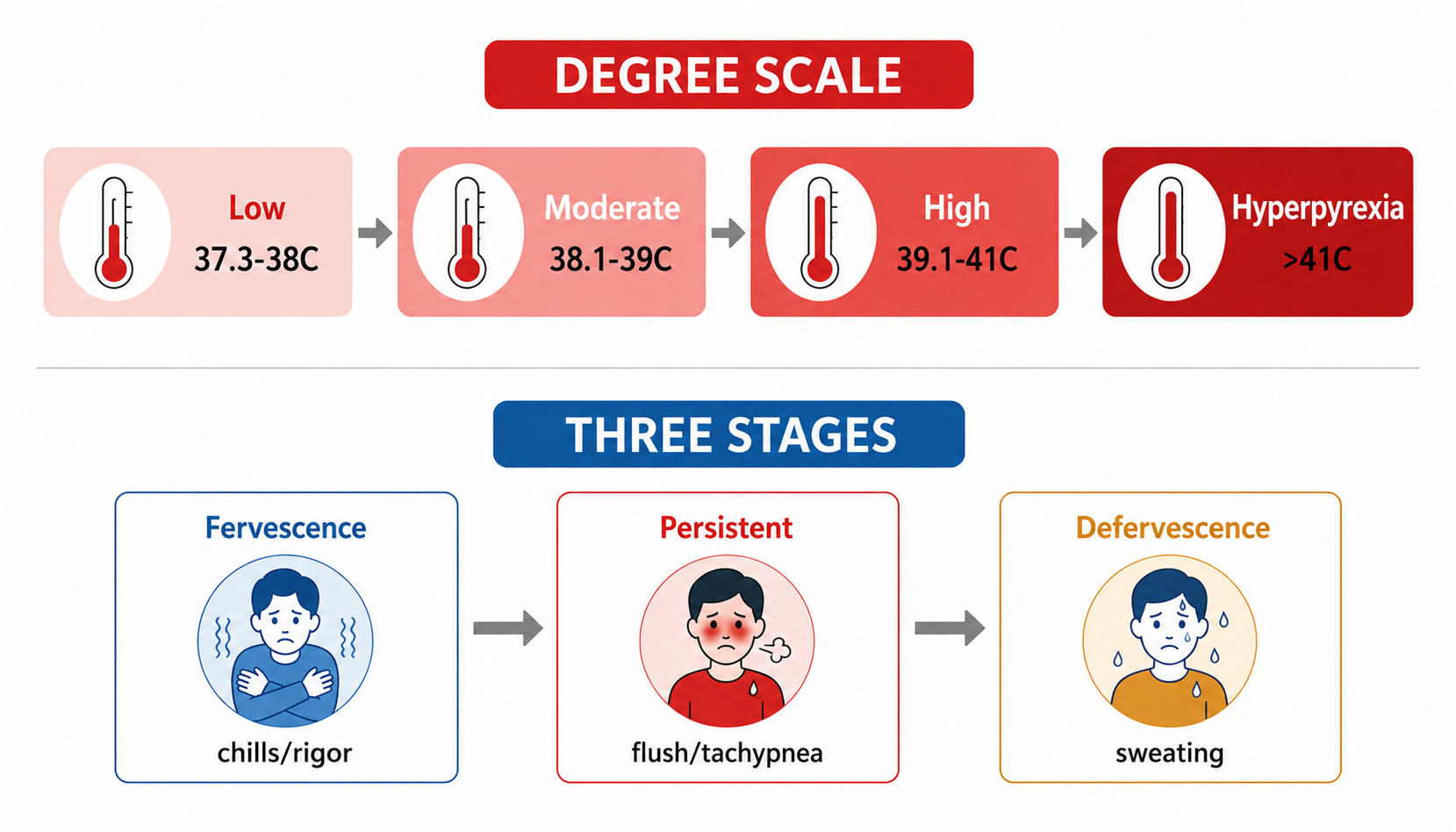
| Low grade (低热) | 37.3–38℃ |
| Moderate (中等度热) | 38.1–39℃ |
| High (高热) | 39.1–41℃ |
| Hyperpyrexia (超高热) | >41℃ |
Three Stages of Fever
- Fervescence (体温上升期): heat production > heat loss — chills, rigor, pallor, malaise, myalgia
- Persistent febrile (高热持续期): heat production = heat loss — flush, hot skin, deep fast breathing, HR↑
- Defervescence (体温下降期): heat production < heat loss — sweating, moist skin
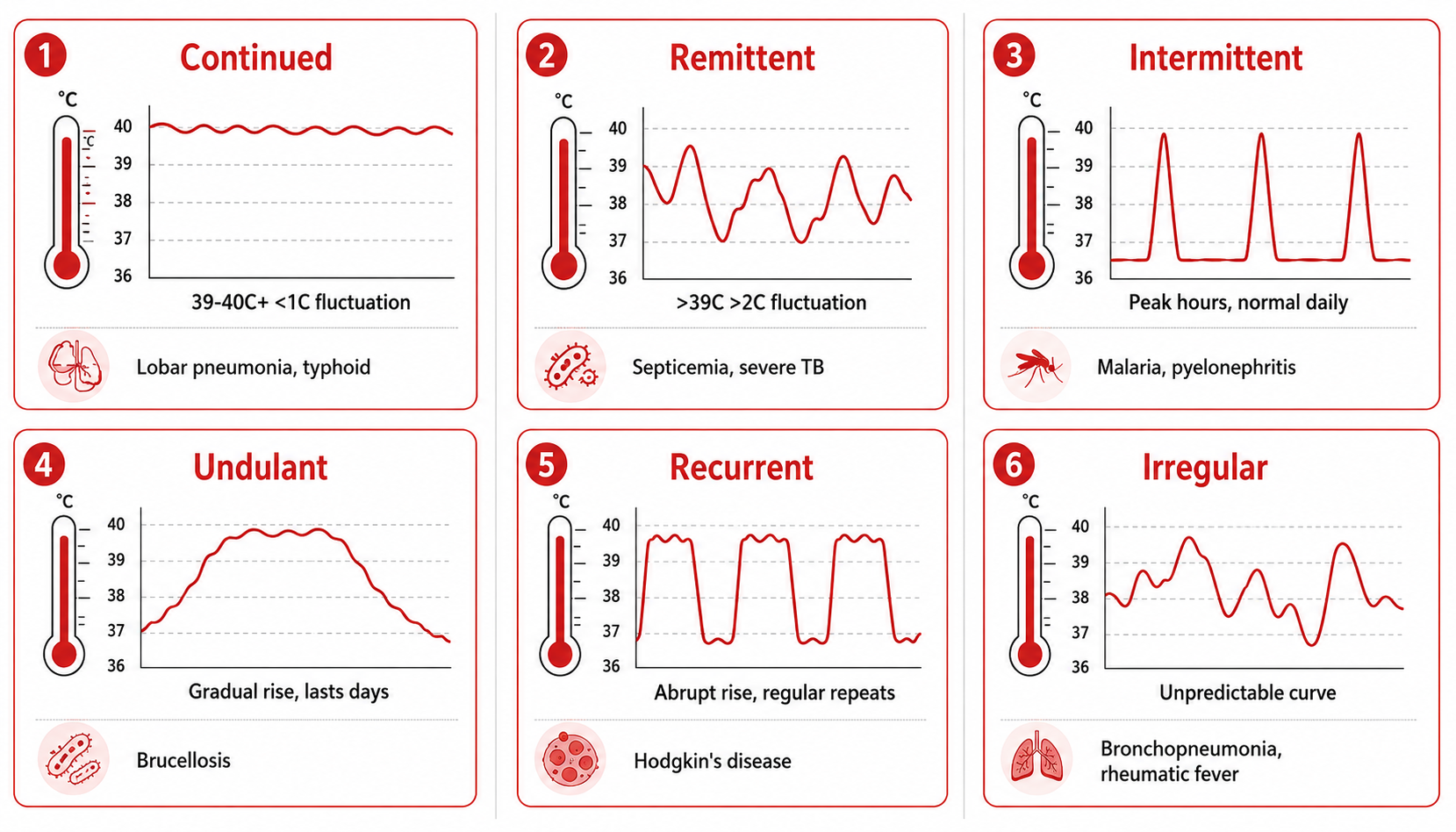
Fever Types (热型) — MUST KNOW
| Type | Characteristics | Typical Diseases |
|---|---|---|
| Continued (稽留热) | 39–40℃+, fluctuation <1℃ in 24h | Lobar pneumonia, typhus, typhoid |
| Remittent (弛张热) | >39℃, fluctuation >2℃ in 24h, never falls to normal | Septicemia, severe TB, purulent inflammation |
| Intermittent (间歇热) | Rises to peak hours, falls to normal daily, febrile/afebrile alternate | Malaria, acute pyelonephritis |
| Undulant (波状热) | Rises gradually to 39℃+, lasts days, returns gradually, repeats | Brucellosis |
| Recurrent (回归热) | Rises abruptly to 39℃+, lasts days, falls abruptly, repeats regularly | Hodgkin's disease |
| Irregular (不规则热) | Irregular curve | Bronchopneumonia, TB, rheumatic fever, exudative pleuritis |
> Note: Antibiotics/antipyretics/corticosteroids may convert typical fever types to irregular; elderly pneumonia may show only low-grade or no fever.
Etiology
1. Hematological diseases (leukemia, lymphoma) 2. Connective tissue diseases (SLE, dermatomyositis, scleroderma) 3. Allergic reactions (rheumatic fever, drug fever, hemolysis) 4. Endocrine/metabolic (hyperthyroidism, gout) 5. Thrombosis/embolism (MI, pulmonary infarction, splenic infarction) 6. CNS disorders (brain hemorrhage, concussion) 7. Reduced heat loss (extensive dermatitis, heart failure) 8. Malignancy 9. Physical/chemical factors (heat stroke, surgery, fracture) 10. Autonomic nerve dysfunction (primary low fever, post-infection low fever, summer low fever)
- Infective fever: bacteria, viruses, fungi, rickettsiae, chlamydia, parasites (most common cause)
- Non-infective fever (10 categories):
Fever of Unknown Origin (FUO) — Diagnostic Approach
- History: onset (season), duration, characteristics, associated symptoms, medication, epidemiology + geography
- Accompaniments: headache, myalgia, arthralgia, chills/rigor (lobar pneumonia, septicemia), conjunctival petechiae (epidemic hemorrhagic fever), herpes simplex, lymphadenopathy (mononucleosis), hepatosplenomegaly (leukemia), mucocutaneous hemorrhage, rash (measles, scarlet fever, rubella), coma (epidemic encephalitis, cerebral hemorrhage)
- Common causes: infections 20–40%, CTD ~20%, malignancy 10–20%, undiagnosed ~20%, drugs rare
- Treatment: find the cause → treat underlying disease → physical methods → antipyretics → glucocorticoids → antimicrobials
Core Concepts — Edema (水肿)
Definition & Mechanisms
- Edema: excessive fluid in the tissues; can increase by several liters before recognized. Hydrothorax/ascites = special forms (hydrops).
- Pitting on pressure; distinguish from myxedema (non-pitting) and lymphatic obstruction
- Four forces: (1) capillary hydrostatic pressure + (4) interstitial colloid osmotic pressure → promote fluid out of vessels; (2) plasma colloid osmotic pressure + (3) interstitial hydrostatic pressure → oppose
- Mechanisms: ①imbalance of fluid interchange (↑hydrostatic pressure, ↓plasma oncotic pressure, lymphatic obstruction, ↑capillary permeability); ②renal sodium/water retention (↓GFR, glomerular-tubular imbalance, ↑ADH/aldosterone)
Classification & Features
| Type | Onset site | Speed | Direction | Nature | Associated |
|---|---|---|---|---|---|
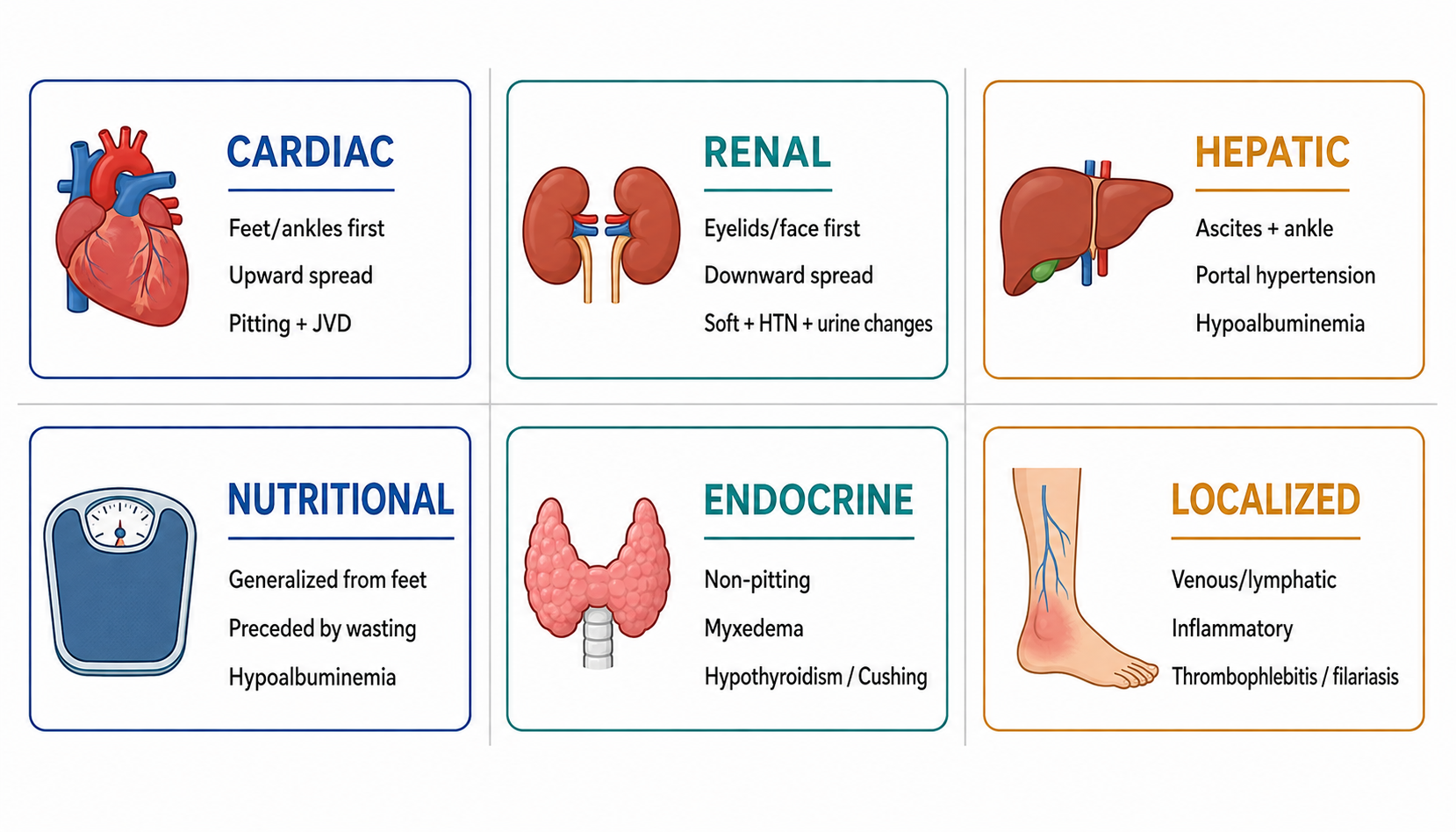
| Renal edema | Eyelids/face (soft tissues) | Rapid | Downward | Soft | Hypertension, urine changes, renal impairment |
| Cardiac edema | Feet/ankles (dependent) | Slow | Upward | Solid/pitting | JVD, hepatojugular reflux, smooth tender hepatomegaly, hydrothorax/ascites |
| Hepatic edema | Ascites + ankle | — | — | — | Portal hypertension, hypoalbuminemia, secondary hyperaldosteronism |
| Nutritional | Generalized from feet | — | — | — | Preceded by emaciation/weight loss, hypoalbuminemia, Vit B1 deficiency |
| Endocrine | — | — | — | Non-pitting (myxedema) | Hypothyroidism (myxedema), pretibial myxedema (hyperthyroidism), aldosteronism, Cushing |
- Localized edema: venous/lymphatic obstruction (thrombophlebitis, chronic lymphangitis, filariasis → rubber leg), inflammatory edema (non-pitting, red, hot, tender)
- Associated symptoms: edema + hepatomegaly → cardiac/hepatic/nutritional; + JVD → cardiac; + massive proteinuria → renal; + dyspnea/cyanosis → cardiac/SVC obstruction; + menstruation relation → premenstrual; + emaciation → nutritional
Core Concepts — Weight Loss / Emaciation (消瘦)
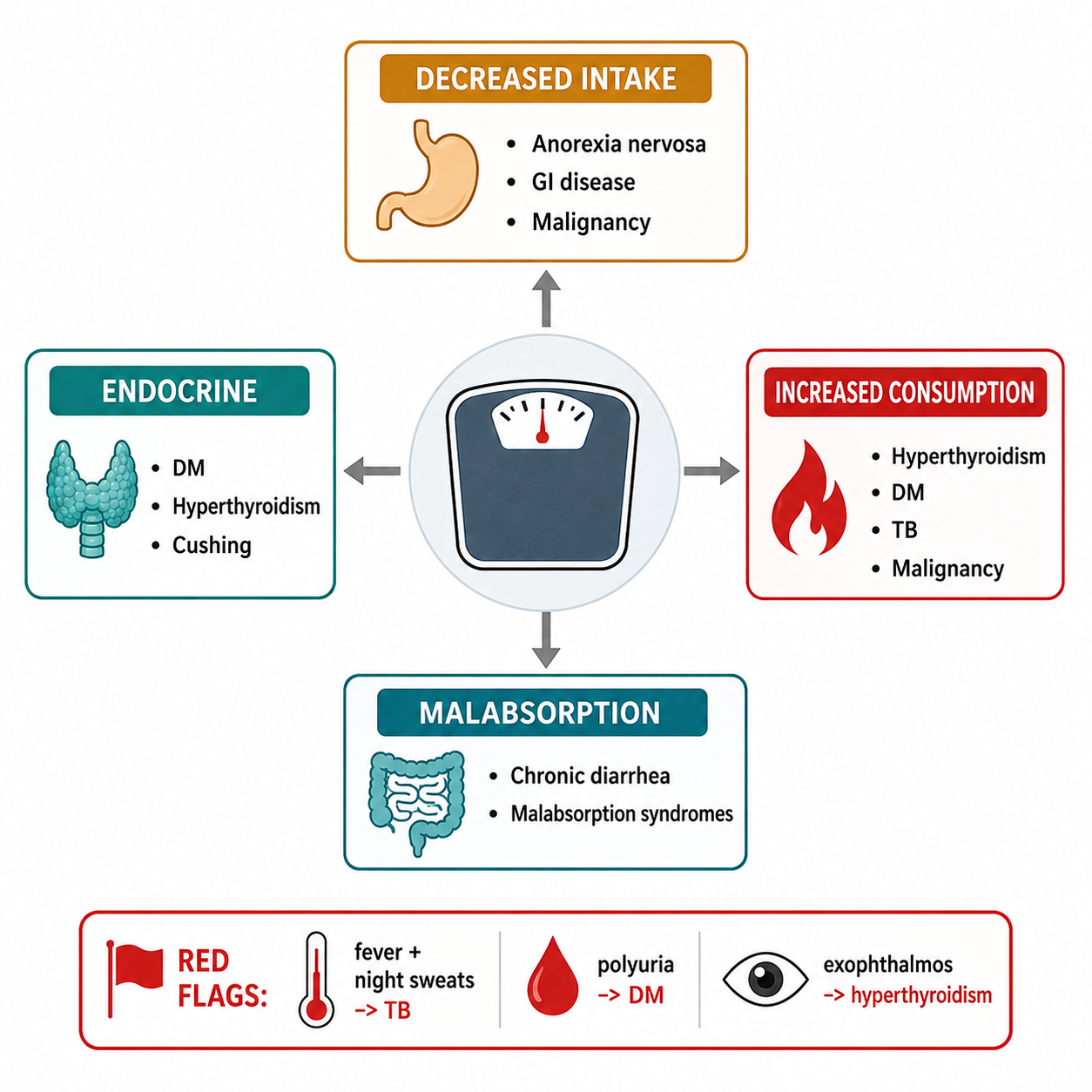
- Weight loss due to decreased intake, increased metabolism, or malabsorption
- Diagnostic criteria: body weight below standard, or significant loss over time
- Etiology: ①decreased intake — anorexia nervosa, GI disease, malignancy; ②increased consumption — hyperthyroidism, DM, malignancy, TB, chronic infection; ③malabsorption — chronic diarrhea, malabsorption syndromes; ④endocrine — DM, hyperthyroidism; ⑤chronic wasting — HIV, malignancy, cachexia
- History taking: onset and duration, amount of loss, diet, fever, diarrhea, polyuria/polydipsia, night sweats, medications, family history
High-Yield Points
- Fever degree table (37.3–38 / 38.1–39 / 39.1–41 / >41) and 6 fever types with classic diseases are high-yield for exams
- Continued fever = lobar pneumonia/typhoid; remittent = septicemia; intermittent = malaria; undulant = brucellosis; recurrent = Hodgkin's
- T↑1℃ → HR↑10–20, R↑4
- Cardiac vs renal edema: feet-first vs eyelids-first; upward vs downward; solid vs soft; JVD vs hypertension/urine changes
- Edema mechanisms: Starling forces + renal Na/H2O retention (RAAS, ADH)
- Myxedema = non-pitting (hypothyroidism); pretibial myxedema = hyperthyroidism
- Weight loss + fever + night sweats → TB; + polyuria/polydipsia → DM; + exophthalmos → hyperthyroidism
LMCHK OSCE Practice
- Fever history: onset (season), fever pattern over days, chills vs rigor, associated symptoms (cough, rash, joint pain, headache), travel/epidemic exposure, medication history, immunocompromised status
- Edema history: onset/speed, starting site, progression (pitting?), posture/exercise relation, associated dyspnea/palpitation/oliguria, past cardiac/renal/hepatic/endocrine disease, drugs/diet/menstruation/pregnancy
- Look for the classic case style: young woman, arthralgia 2 years + fever 3 weeks + malar rash → SLE (check ANA, complement); 38-yo man, fever after cold, left lower dullness + bronchial breath + moist rales → lobar pneumonia
- Spot diagnosis: myxedema facies, pretibial myxedema, Cushingoid features, emaciation/cachexia
Topic Summary
Fever: pyrogen-driven set point reset (exogenous→endogenous pyrogen→POAH). Know the degree scale, 3 stages, 6 fever types with exemplar diseases, and 10 non-infective categories. Edema: Starling forces + renal retention; differentiate cardiac (feet, pitting, JVD) vs renal (eyelids, soft, hypertension) vs hepatic (ascites) vs endocrine (non-pitting). Weight loss: reduced intake, hypermetabolism, malabsorption — always screen for TB, DM, hyperthyroidism, malignancy. History-taking structure and common-first thinking drive the differential.