Preparatory Mindset
Urinary symptoms (frequency, urgency, dysuria, oliguria, anuria, polyuria, hematuria) are the window into the renal tract and metabolic/endocrine systems. For each, know the definition (numbers matter!), the mechanism, and the differential. Urinalysis, culture, and renal function tests are the standard workup. Remember the classic pairs to differentiate: DM vs diabetes insipidus, central DI vs nephrogenic DI, prerenal vs renal vs postrenal oliguria.
Illustrations(图解速览)
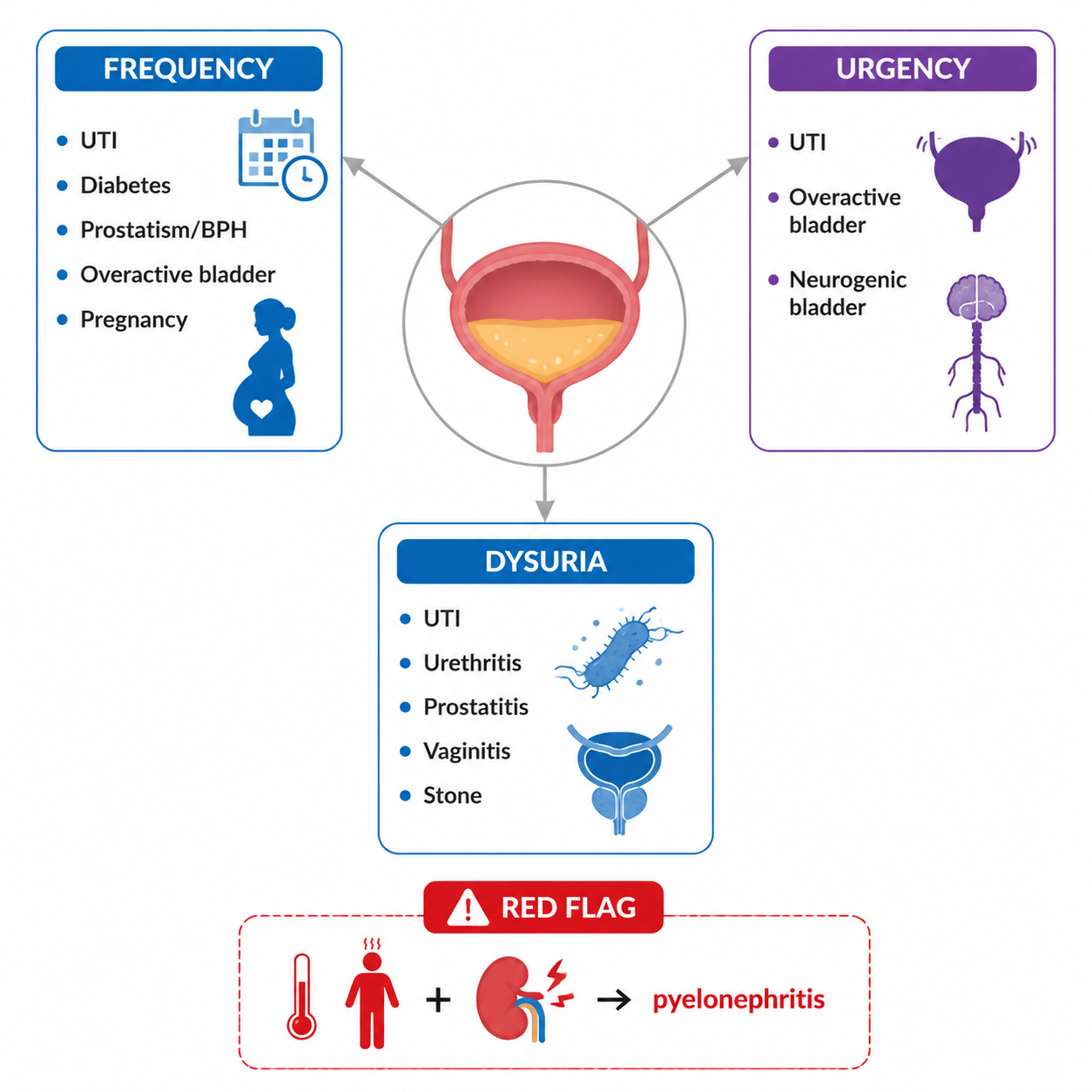
Core Concepts — Frequency & Urgency (尿频、尿急)
Definitions
- Frequent micturition (尿频): urinating more often than usual
- Urgent micturition (尿急): sudden, strong need to urinate that is difficult to delay
Causes
- UTI (most common), enlarged prostate (middle-aged/older men), urethritis, vaginitis
- Nerve-related problems: overactive bladder (OAB), stroke, Alzheimer's, spinal cord disease
- Diabetes (uncontrolled), pregnancy, interstitial cystitis, diuretics, caffeine/alcohol, anxiety
- Less common: bladder cancer, pelvic tumor, radiation therapy to pelvis
Evaluation
- Urinalysis, urine culture, cystometry/urodynamic testing, cystoscopy, pelvic/abdominal ultrasound, nervous system tests
- Risk factors: age, diabetes, cognitive decline
- Complications: depression/anxiety, sleep disturbance, sexual issues — affects quality of life
Core Concepts — Dysuria (尿痛)
- Pain or burning on urination; more common in women
- Women: cystitis, vaginal infection, UTI, urethritis, endometritis, diverticulitis; also sexual intercourse, douches, soaps, spermicides
- Men: UTI, prostate disease (prostatitis, BPH), cancer
- Both: STIs, chemotherapy/radiation cystitis, medications
Core Concepts — Oliguria & Anuria (少尿、无尿)
Definitions
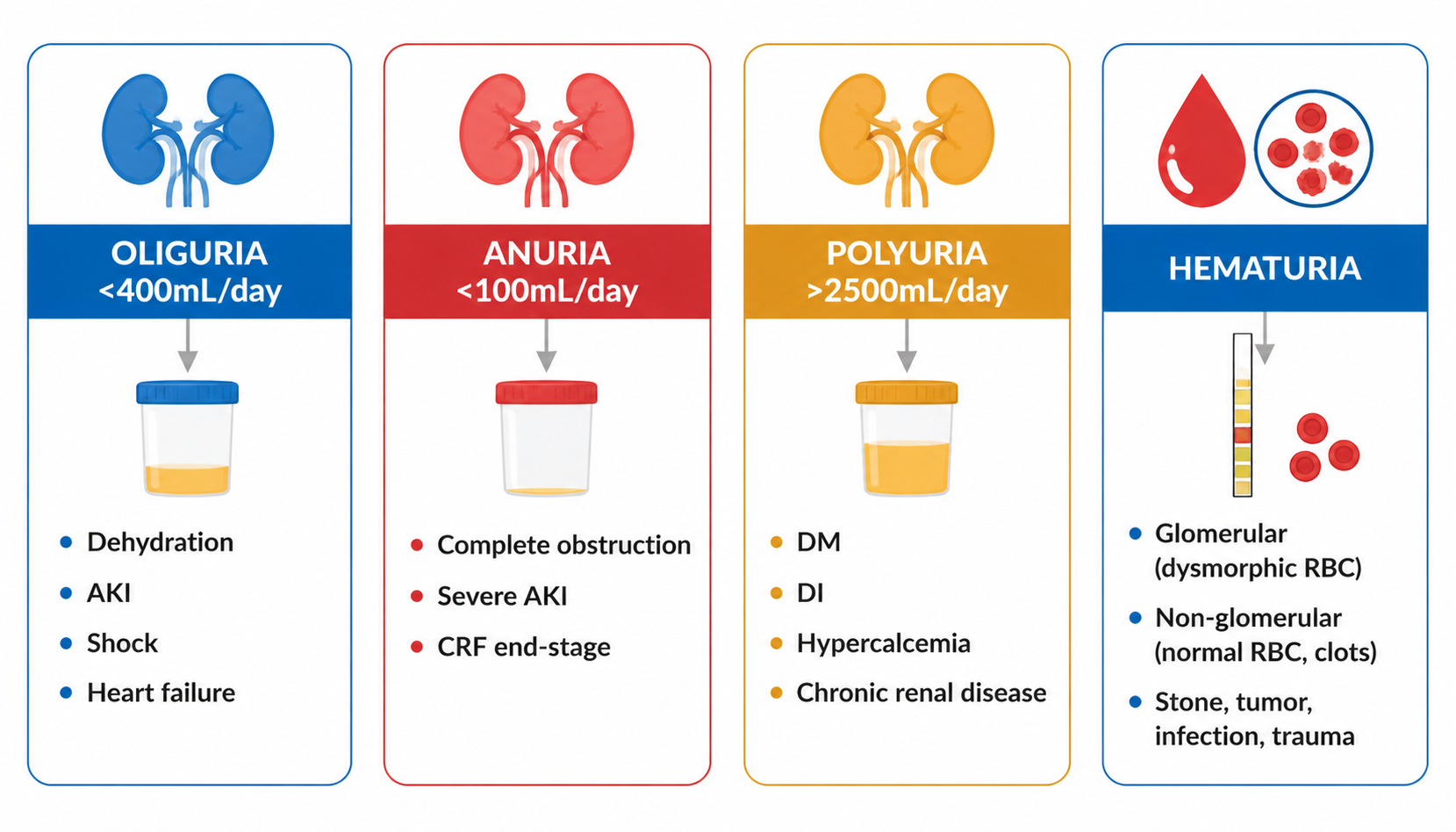
| Term | Definition |
|---|---|
| Oliguria (少尿) | Urine output 100–400 ml/day (adult); <1 ml/kg/h (infants); <0.5 ml/kg/h (children) |
| Anuria (无尿) | <100 ml/day — usually kidney failure or bladder outlet obstruction |
Causes of Oliguria
- Prerenal: dehydration, hypovolemic shock (>20% blood/fluid loss), heart failure, sepsis
- Renal: acute tubular necrosis, glomerulonephritis, acute/chronic renal failure, nephrotoxins, multiple organ dysfunction
- Postrenal: urinary obstruction (stones, BPH, tumors), urinary retention
- Metabolic: DKA, hyperosmolar hyperglycemic state (HHNS), pre-eclampsia
Anuria — more extreme
- Kidney failure (end-stage), bladder outlet obstruction (BPH, severe stones/tumors)
Core Concepts — Polyuria (多尿)
Definition
- Excessive urine production: >2500 ml/day (adult), or >5 ml/kg/h; often with polydipsia
- Not to be confused with frequent micturition (frequency is usually an accompanying symptom)
Four Mechanisms / Causes
- Inefficient ADH action → diabetes insipidus: Central (neurogenic) DI vs Nephrogenic DI - Renal disorders: UTI, RTA, Bartter/Gitelman, renal glucosuria, chronic renal failure
- Increased fluid intake: psychogenic polydipsia (compulsive water drinking), iatrogenic
- Increased solute excretion (osmotic diuresis): DM, mannitol, salt loss (adrenal insufficiency, aldosterone resistance, diuretics, cerebral salt wasting)
- Impaired urinary concentration:
- Physiological
Polyuria History & Exam
- Age of onset (congenital/acquired), fever (UTI), nocturnal polydipsia, salt craving (adrenal insufficiency), failure to thrive (DM, nephrogenic DI, RTA), head trauma/neurosurgery (central DI), meningitis (central DI), drugs (diuretics, mannitol), increased ICP (CNS tumor), muscle weakness (hypokalemia, RTA, Bartter), constipation/paresthesia (hypercalcemia)
- Exam: dehydration/shock signs, growth, midline defects (central DI), neurological deficits
Core Concepts — Hematuria (血尿)
Definitions
- Microscopic: >3 RBC/HPF on urine microscopy (not visible)
- Gross (macroscopic): visible blood — red, smoky, or clot-containing urine
- True hematuria ≠ red urine from beetroot, drugs (rifampicin), myoglobinuria, hemoglobinuria, porphyria
Causes
| Site | Causes |
|---|---|
| Glomerular | Glomerulonephritis (IgA nephropathy, post-strep GN, nephritic syndrome), thin basement membrane |
| Renal parenchymal | Pyelonephritis, polycystic kidney, renal tumor, trauma, papillary necrosis |
| Ureter | Stones, tumor, stricture |
| Bladder | Cystitis, stones, bladder cancer (painless hematuria in elderly!) |
| Prostate/urethra | Prostatitis, BPH, urethritis, trauma |
Key discriminators
- Glomerular: dysmorphic RBCs, RBC casts, proteinuria, often with edema/HTN
- Painful vs painless: painless gross hematuria in elderly → bladder/renal cancer until proven otherwise
- Initial blood (urethral), terminal (bladder/trigone/prostate), total (above bladder)
- Clots: upper tract or heavy bladder bleeding
High-Yield Points
- Oliguria <400 ml/day; anuria <100 ml/day; polyuria >2500 ml/day — memorize the numbers
- Frequency/urgency/dysuria triad → UTI; in older men think BPH
- Polyuria + polydipsia: DM (glucose osmotic diuresis) vs DI (ADH problem) vs psychogenic
- Central DI (no ADH; responds to desmopressin) vs nephrogenic DI (ADH-resistant)
- Painless gross hematuria in elderly smoker → bladder cancer — cystoscopy
- RBC casts + dysmorphic RBCs + proteinuria → glomerular bleeding
- Pre-renal (dehydration/shock) → renal (ATN/glomerular) → postrenal (obstruction): screen with urinalysis, Cr, ultrasound
- Urinalysis components: physical (volume, color, pH, SG), chemical (protein, glucose, ketones, bilirubin, blood), microscopic (cells, casts, crystals)
LMCHK OSCE Practice
- Urinary symptom history: onset, dysuria/hesitancy, hematuria (initial/terminal/total), flank pain, fever, oliguria/anuria, polyuria, nocturia, prostate symptoms (weak stream, incomplete emptying), medications, DM history
- Always check urine dipstick: blood, protein, glucose, leukocytes/nitrite (UTI screen)
- Polyuria workup: fluid deprivation + desmopressin response (DI), glucose (DM), electrolytes
- Renal exam cases (LMCHK general medicine): look for edema, HTN, signs of uremia (pallor, flap), palpable kidneys (polycystic)
Topic Summary
Frequency/urgency/dysuria → UTI, BPH, OAB. Oliguria/anuria: classify prerenal-renal-postrenal; resuscitate and screen (urinalysis, Cr, ultrasound). Polyuria >2500 ml/day: differentiate DM (osmotic), DI (central vs nephrogenic), psychogenic polydipsia, and renal tubular disorders. Hematuria: glomerular (casts/dysmorphic) vs urologic (painless, elderly → cancer); always check for RBC casts and do full urinalysis. Master the numbers and the DM/DI pair — classic exam content.