Preparatory Mindset
Cough, expectoration, hemoptysis, and dyspnea are the "big four" respiratory symptoms. They cross airway, parenchymal, pleural, cardiovascular, and even CNS pathology. Master the definitions, mechanisms, characteristics (timing/tone/associated symptoms), and red-flag discriminators — especially the classic hemoptysis vs hematemesis table and the sputum color/consistency ladder. Always correlate the symptom with physical signs (clubbing, tracheal deviation, breath sounds) and imaging.
Illustrations(图解速览)
Core Concepts — Cough (咳嗽) & Expectoration (咳痰)
Definition & Reflex Arc
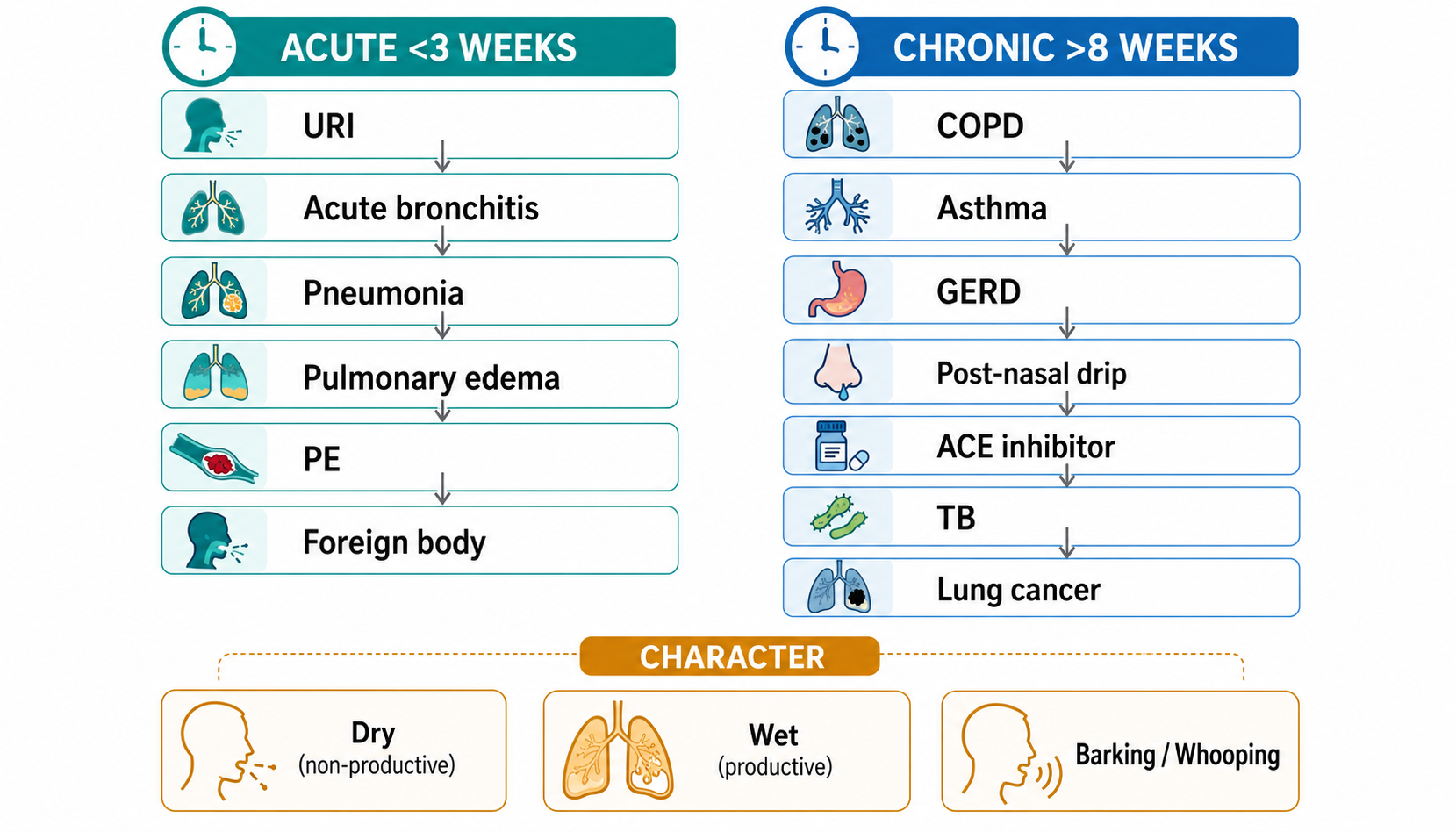
- Cough = sudden explosive expiratory maneuver clearing material from airways; a protective reflex that can be consciously controlled
- Reflex: receptors (laryngeal, tracheobronchial, diaphragm, pleura, esophagus) → afferents (vagus, glossopharyngeal, phrenic) → cough centre (medulla) → efferents (phrenic, spinal motor, recurrent laryngeal, vagal)
- Stimuli: physical, chemical, biological, infective
Etiology
- Respiratory (most common): airway (bronchitis, bronchiectasis, asthma, endobronchial TB, tumor, pharyngitis), lung (infection, edema, fibrosis, tumor), pleural (pleurisy, pneumothorax, mesothelioma)
- Cardiovascular: cardiogenic edema, pulmonary embolism
- CNS: voluntary cough, encephalitis, meningitis
- Others: GERD, upper airway cough syndrome (UACS), cough variant asthma (CVA), drug-induced cough (ACE inhibitors)
Clinical Features
| Feature | Finding | Meaning |
|---|---|---|
| Timing | Morning + bedtime cough | Bronchitis, bronchiectasis |
| Temperature change | Cough variant asthma | |
| Night waking | CVA, pulmonary edema | |
| Chronicity | Acute <3wk; subacute 3–8wk; chronic >8wk | — |
| Tone | Brassy/metallic | Aortic aneurysm, mediastinal tumor, lung cancer compressing trachea |
| Bovine | Tumor involving recurrent laryngeal nerve | |
| Hoarse | Laryngeal disease |
- Associated: fever (infection), chest pain (infection/tumor/pleurisy/pneumothorax/PE), dyspnea, hemoptysis (bronchiectasis/TB/tumor), bulk pus (bronchiectasis/lung abscess), wheezing (asthma/foreign body), clubbing (bronchiectasis/lung cancer/chronic lung abscess)
- Cough with postural change → chronic lung abscess, cavitary TB, bronchiectasis; with eating → swallowing disturbance/tracheoesophageal fistula; with chest pain → pneumonia/pleuritis/lung cancer/infarction/pneumothorax
Sputum Characteristics
| Feature | Finding | Meaning |
|---|---|---|
| Amount | Large frothy | Pulmonary edema |
| Large serous | Alveolar carcinoma | |
| Large purulent + layering (frothy/mucoid/necrotic) | Bronchiectasis, lung abscess | |
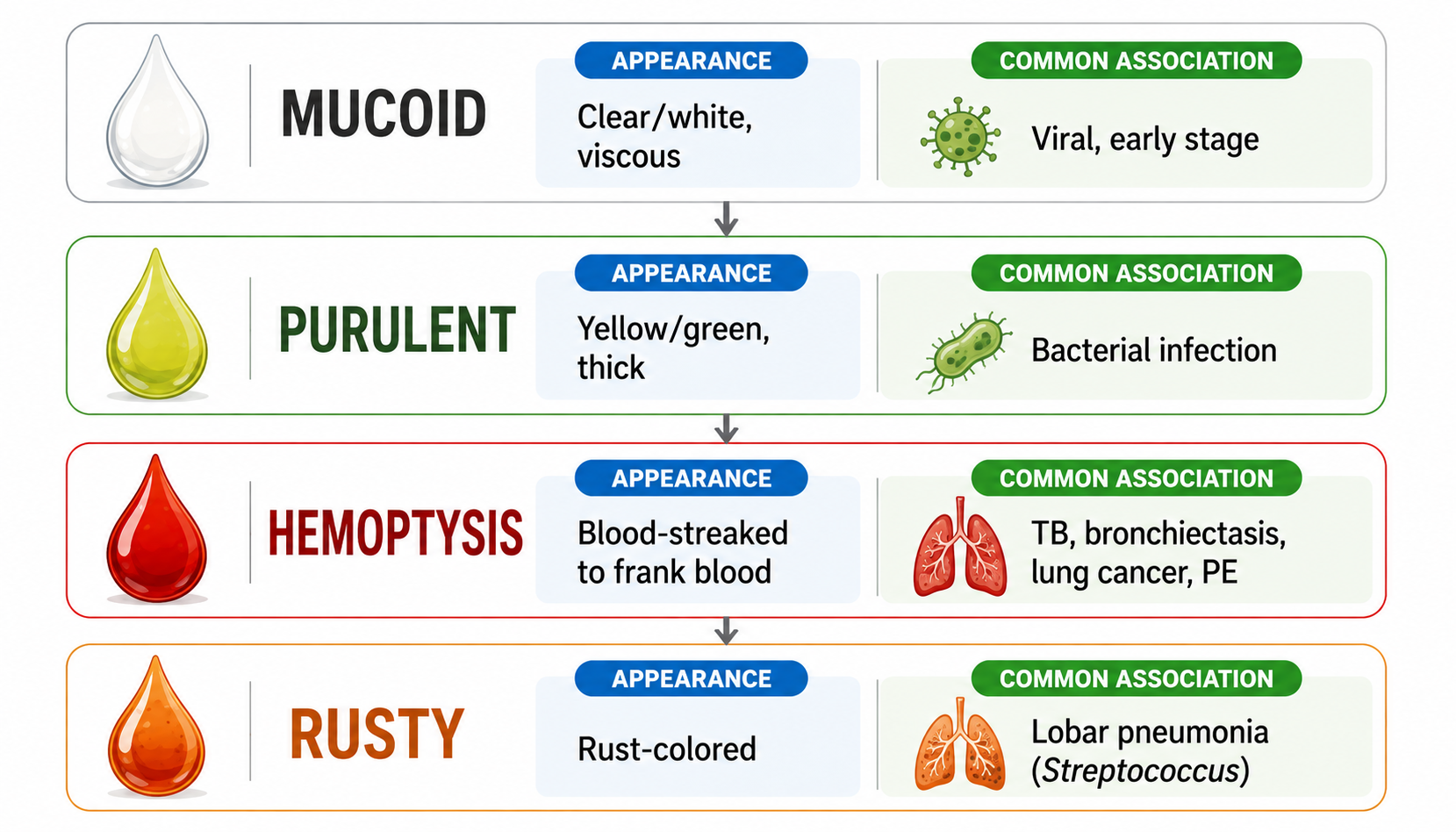
| Consistency | Mucoid | Bronchitis (non-infected), asthma, early pneumonia |
| Purulent/yellow | Bacterial infection | |
| Bloody | Carcinoma, TB, PE, bronchiectasis, mitral stenosis | |
| Color | Rusty | Lobar pneumonia (Strep pneumoniae) |
| Green | Pseudomonas | |
| Pink frothy | Cardiac edema | |
| Grey/black | Dust inhalation | |
| Odor | Foul | Anaerobic infection (bronchiectasis, lung abscess) |
Core Concepts — Hemoptysis (咯血)
Definition & Grading
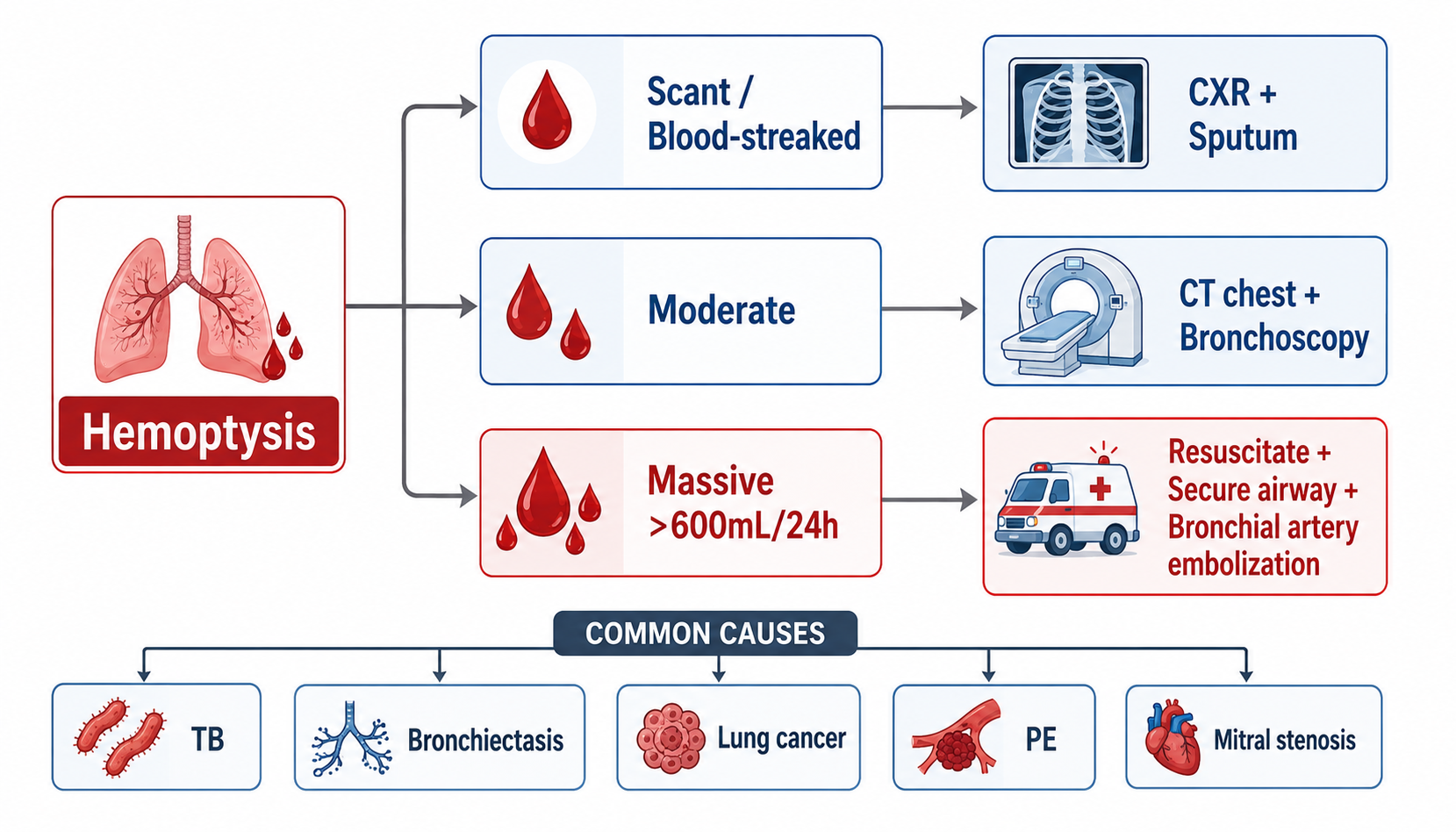
- Bleeding from larynx and lower respiratory tract; blood-streaked sputum to hundreds of ml pure blood
- Mild <100 ml/d; Moderate 100–500 ml/d; Severe >500 ml/d (or 100–500 ml per episode)
Hemoptysis vs Hematemesis — MUST KNOW
| Feature | Hemoptysis | Hematemesis |
|---|---|---|
| Cause | Pulmonary or cardiac | Digestive system |
| Previous symptoms | Cough, chest tightness | Nausea, vomiting |
| Mode | Coughed up | Vomited |
| Color | Bright red | Dark red |
| Mixture | Sputum, frothy | Gastric contents |
| pH | Alkaline | Acidic |
| Tarry stools | - or + | + |
| Post-bleeding | Sputum with blood | No sputum |
Vascular Origin
- Bronchial arteries (systemic, high pressure) are the more important source of hemoptysis than the low-pressure pulmonary circulation — they supply airways and airway lesions
- Massive hemoptysis = potentially life-threatening
Etiology
- Airway diseases (most common): bronchitis, bronchiectasis, carcinoma, bronchial carcinoid, foreign body, aortobronchial fistula (aneurysm — fatal if not treated)
- Pulmonary parenchymal: TB, pneumonia, lung abscess, pulmonary embolism
- Miscellaneous hemorrhage: Goodpasture's, idiopathic pulmonary hemosiderosis, lupus pneumonitis, Wegener's granulomatosis; acute infections (epidemic hemorrhagic fever, leptospirosis)
- Cardiovascular: mitral stenosis, pulmonary hypertension, heart failure
Core Concepts — Dyspnea (呼吸困难)
Definition
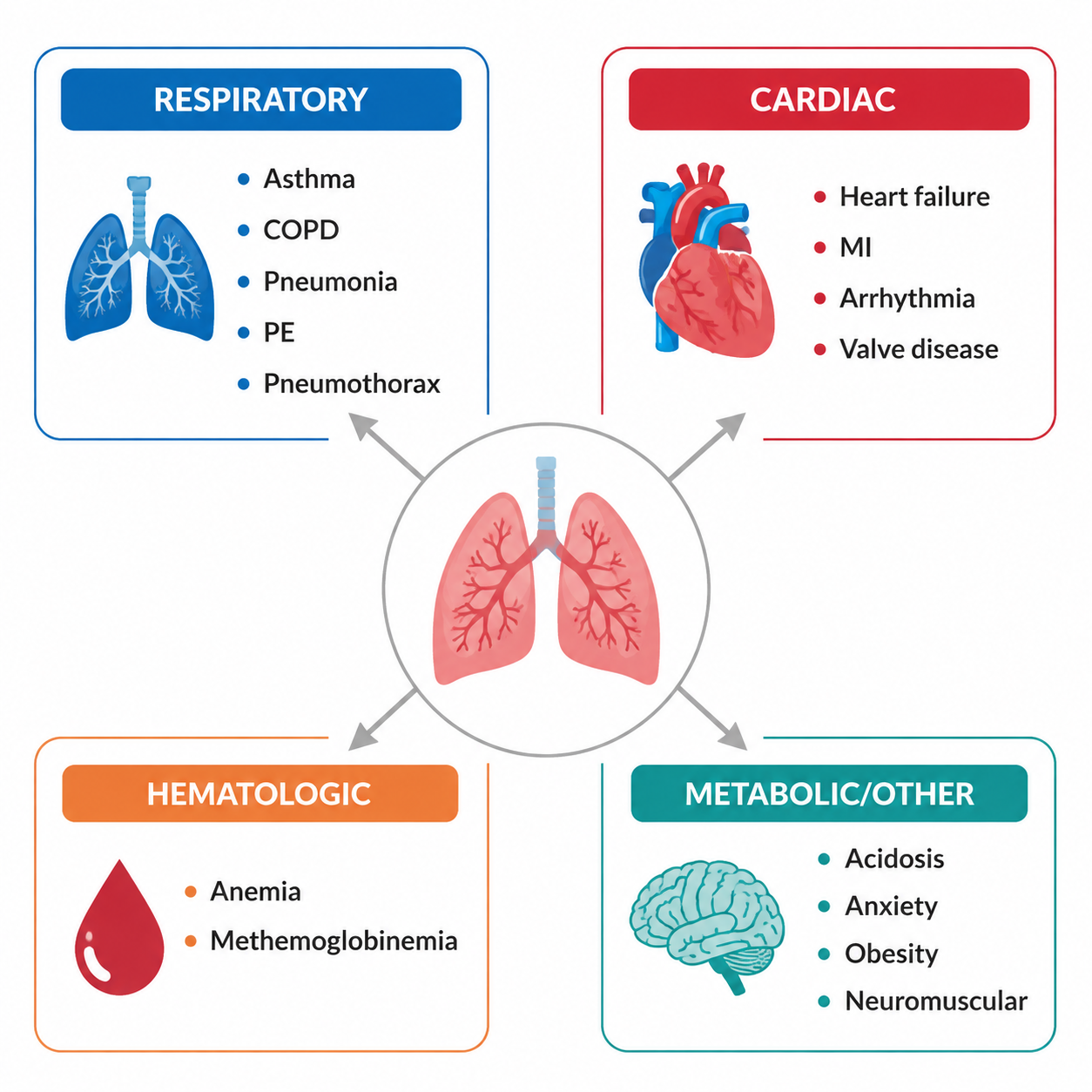
- Subjective sensation of difficulty breathing; objective signs: tachypnea, accessory muscle use, retraction, cyanosis
- Types: exertional, orthopnea, paroxysmal nocturnal dyspnea (PND), resting
Causes
| Type | Example |
|---|---|
| Respiratory | Airway obstruction (asthma, COPD, foreign body), parenchymal (pneumonia, fibrosis), pleural (effusion, pneumothorax), chest wall |
| Cardiac | Left heart failure (PND, orthopnea), mitral stenosis |
| Hematologic | Anemia |
| Metabolic | Metabolic acidosis (Kussmaul), uremia, DKA |
| Neuromuscular | Myasthenia, GBS, ALS |
| Psychogenic | Hyperventilation syndrome, anxiety |
Associated findings
- PND + orthopnea + pink frothy sputum → acute left heart failure/pulmonary edema
- Sudden onset + pleuritic chest pain → pneumothorax, PE
- Inspiratory stridor → upper airway obstruction (croup, foreign body, tumor)
- Expiratory wheeze → asthma/COPD
High-Yield Points
- Hemoptysis vs hematemesis table is a classic exam question (color, mode, pH, mixture, tarry stools)
- Rusty sputum = lobar pneumonia; pink frothy = pulmonary edema; green = Pseudomonas; foul = anaerobic
- Three-layer sputum (frothy/mucoid/necrotic) = bronchiectasis or lung abscess
- Clubbing → bronchiectasis, lung cancer, chronic lung abscess, empyema, pulmonary fibrosis
- Cough variant asthma: cough worse at night, temperature change, no wheeze — responds to asthma treatment
- Bronchial arteries (high-pressure) > pulmonary arteries as source of hemoptysis
- Massive hemoptysis >500 ml/d is an emergency — protect the airway
- Chronic cough >8 weeks needs investigation: CXR, consider TB/bronchiectasis/tumor/GERD/UACS/CVA
LMCHK OSCE Practice
- Respiratory symptom history: onset (sudden/gradual), duration, aggravating/relieving factors (posture, cold air, exercise), sputum quantity/color/odor/blood, associated fever/chest pain/dyspnea/wheeze, smoking history, occupation, TB contact, medication (ACE inhibitor?)
- Hemoptysis workup thinking: CXR/CT chest, bronchoscopy if central lesion suspected; gastroscopy if hematemesis — but take detailed history first (case: 55yo smoker, 1000ml bright red blood, 30yr smoking → CT revealed thoracic aortic aneurysm; bronchoscopy may be contraindicated in suspected aneurysm!)
- OSCE respiratory exam common findings: lobectomy scars, bronchiectasis, pulmonary fibrosis (autoimmune); comment on breath sounds: inspiratory/expiratory phase, intensity, added sounds, vocal resonance
- Comment on clubbing: nail-bed angle >180°, loss of nail angle, shiny periungual skin
Topic Summary
Cough is a protective reflex initiated by airway/pleural/CV/CNS stimuli — characterize by timing, tone, sputum, and associated symptoms. Sputum color/consistency/amount/localization gives etiologic clues (rusty=pneumococcal, pink frothy=pulmonary edema, 3-layer= bronchiectasis). Hemoptysis is bleeding from larynx downward — distinguish from hematemesis (color/mode/pH/stools) and identify the source (usually bronchial arteries). Dyspnea spans pulmonary, cardiac, metabolic, and psychogenic causes; PND/orthopnea point to left heart failure, sudden-onset to pneumothorax/PE.