Preparatory Mindset
The nervous-system symptoms (headache, syncope, vertigo, disturbance of consciousness, lumbodorsalgia, arthralgia) require you to think in terms of lesion localization (cortex vs brainstem vs spinal cord vs peripheral) and mechanism (vascular, inflammatory, metabolic, toxic, structural). Consciousness requires understanding the two components: arousal (brainstem ARAS) and awareness (cortex). Always use the GCS for coma, and take a careful witness history for syncope vs seizure.
Illustrations(图解速览)
Core Concepts — Disturbance of Consciousness (意识障碍)
Anatomy: Arousal vs Awareness
- Consciousness = awareness + arousal
- Arousal (觉醒): ability to interact with environment — primitive "on-off switch" via ascending reticular activating system (ARAS) in brainstem, projecting diffusely to cortex
- Awareness (意识内容): depth/content — orientation, attention, memory, thought, perception, intellect, mood
- Mechanisms: ①bilateral diffuse cortical failure (impaired awareness, intact arousal → vegetative state); ②brainstem failure (ARAS off → impaired arousal); ③combined cortical + brainstem failure (generalized/metabolic)
Levels of Consciousness — MUST KNOW
| Level | Features |
|---|---|
| Alert | Normal |
| Lethargy (嗜睡) | Permanent sleeping, wakable, answers simple questions correctly, falls asleep when stimulus stops |
| Stupor (昏睡) | Wakable only by strong/painful stimuli, fending-off motor response, no verbal response, no purposeful movement |
| Light coma (浅昏迷) | No wakening, primitive/disordered motor response to strong pain, loss of abdominal/cremasteric reflexes, other reflexes preserved |
| Moderate coma (中度昏迷) | Between light and deep |
| Deep coma (深昏迷) | No response to most painful stimuli, loss of all reflexes (esp. corneal), vital sign changes |
| Confusion (意识模糊) | Impaired arousal + awareness, orientation dysfunction, incomplete cooperation |
| Delirium (谵妄) | Impaired awareness with agitation, orientation/intelligence/emotion disorder, visual hallucinations, fragment delusions, worse at night |
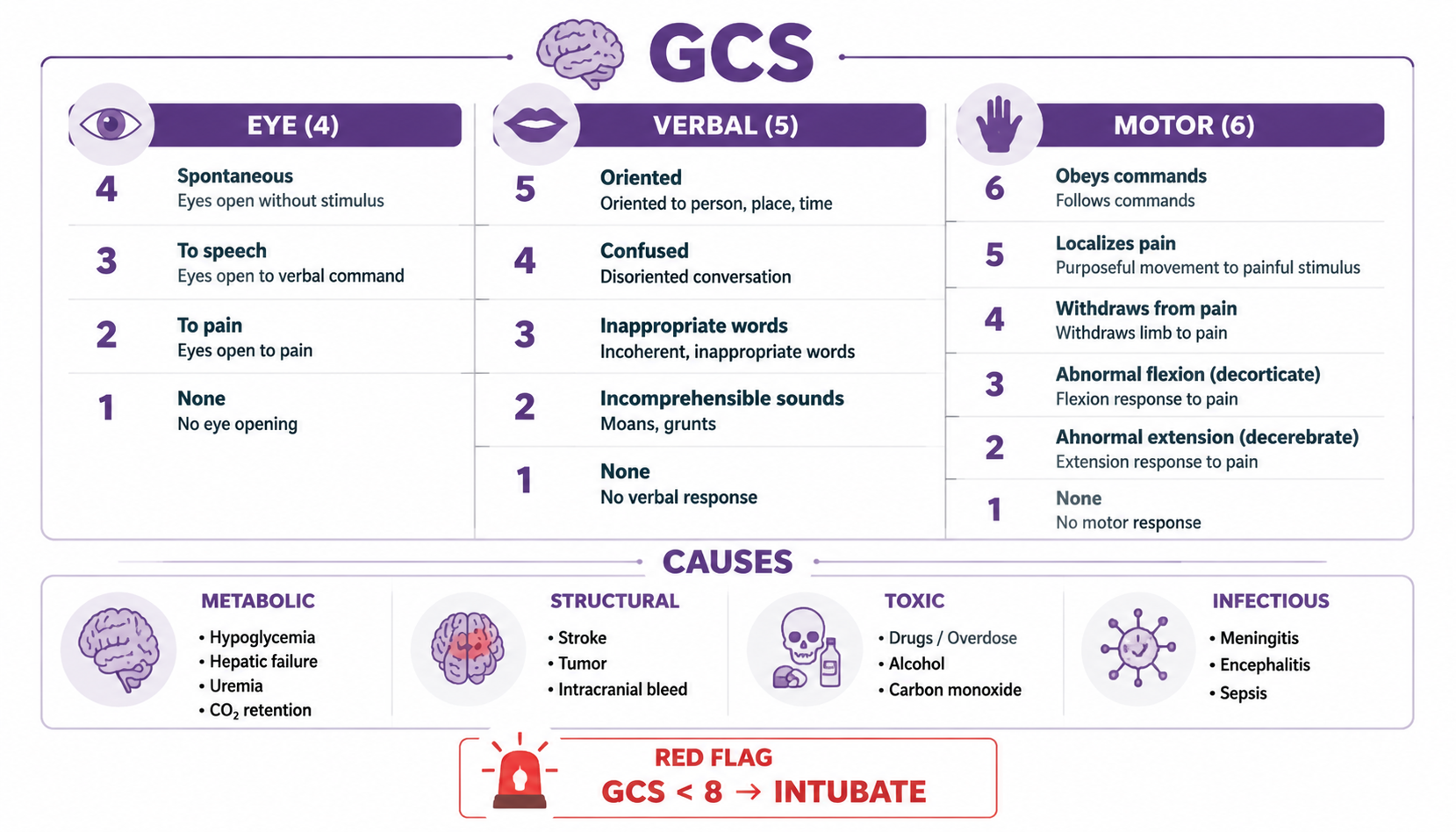
- Glasgow Coma Scale (GCS): E (4) + V (5) + M (6) = 3–15; coma = GCS ≤8 (light 6–8, deep 3–5); fixed pupils + absent oculocephalic reflex → worse prognosis
Etiology of Coma
- Infectious: CNS (meningitis, encephalitis, brain abscess) and non-CNS (sepsis)
- Other CNS: stroke, hemorrhage, tumor, trauma
- Endocrine/metabolic: uremia, hepatic failure, diabetic coma (DKA/hyperosmolar), hypoglycemia, respiratory failure (CO2 narcosis), electrolyte disturbance
- Cardiovascular: shock, cardiac arrest
- Toxic: alcohol, drugs/poisoning
- Physiologic/anoxic: heat stroke, asphyxia
Approach to Coma
- Look for evidence of primary nervous system disease — focal signs, cervical rigidity (meningeal irritation)
- Look for non-CNS generalized disease — pulmonary, hepatic, metabolic, renal, electrolyte
- Look for toxic causes (extraneous)
- History from patient + witnesses; exam: vital signs, pupils, fundi, meningeal signs, focal deficits, GCS
Core Concepts — Syncope (晕厥)
Definition & Mechanism
- Brief loss of consciousness due to transient diminution of cerebral circulation (or changes in blood composition: hypoglycemia, hypocapnia)
- Erect position: consciousness lost when mean arterial pressure falls 20–30 mmHg or heart stops 4–5 seconds
- Symptoms: "weak spells," "light-headedness," "blackouts"
Causes
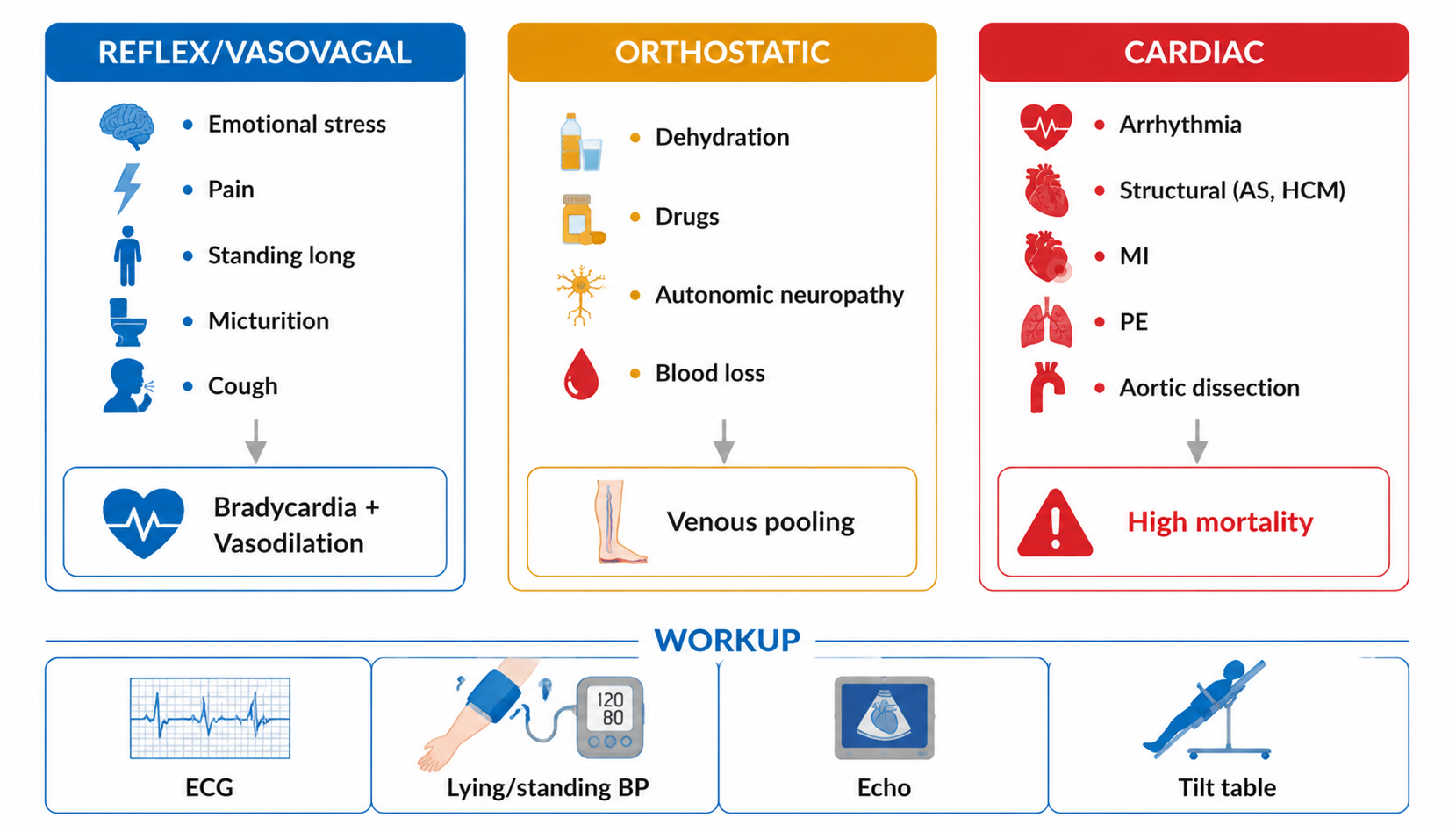
- Vasovagal (vasodepressor) faint — most common
- Cardiac dysrhythmias (Adams-Stokes: tachy- or bradycardia)
- Seizure (syncope-like)
- Anaphylaxis
- Autonomic dysfunction with orthostatic hypotension
- Pulmonary embolism, aortic stenosis, cerebrovascular disease
Syncope vs Seizure — Key Differences
| Feature | Syncope | Seizure |
|---|---|---|
| Onset | Gradual, prodrome (lightheaded, diaphoresis, nausea) | Sudden |
| Posture | Often upright | Any |
| Duration | Seconds to ~1 min | Minutes |
| Motor | Flaccid, no tonic-clonic | Tonic-clonic, automatisms |
| Incontinence | Uncommon | Common |
| Tongue bite | No | Possible (lateral) |
| Post-ictal | Rapid recovery | Confusion, drowsy, headache |
| Injury | Less | More |
Core Concepts — Headache (头痛)
Definition & Mechanism
- Pain in the cranial vault, orbits, and nape of the neck (face pain not included); one of the most common symptoms
- Mechanisms: vascular (intra-extracranial spasm/dilatation/stretch), meningeal irritation/stretch, irritation of CN V/IX/X and cervical nerves, head/neck muscle contraction, chemical/endocrine/psychogenic (via vascular), ophthalmic/rhinologic/otologic/stomatologic disease
Causes
| Category | Examples |
|---|---|
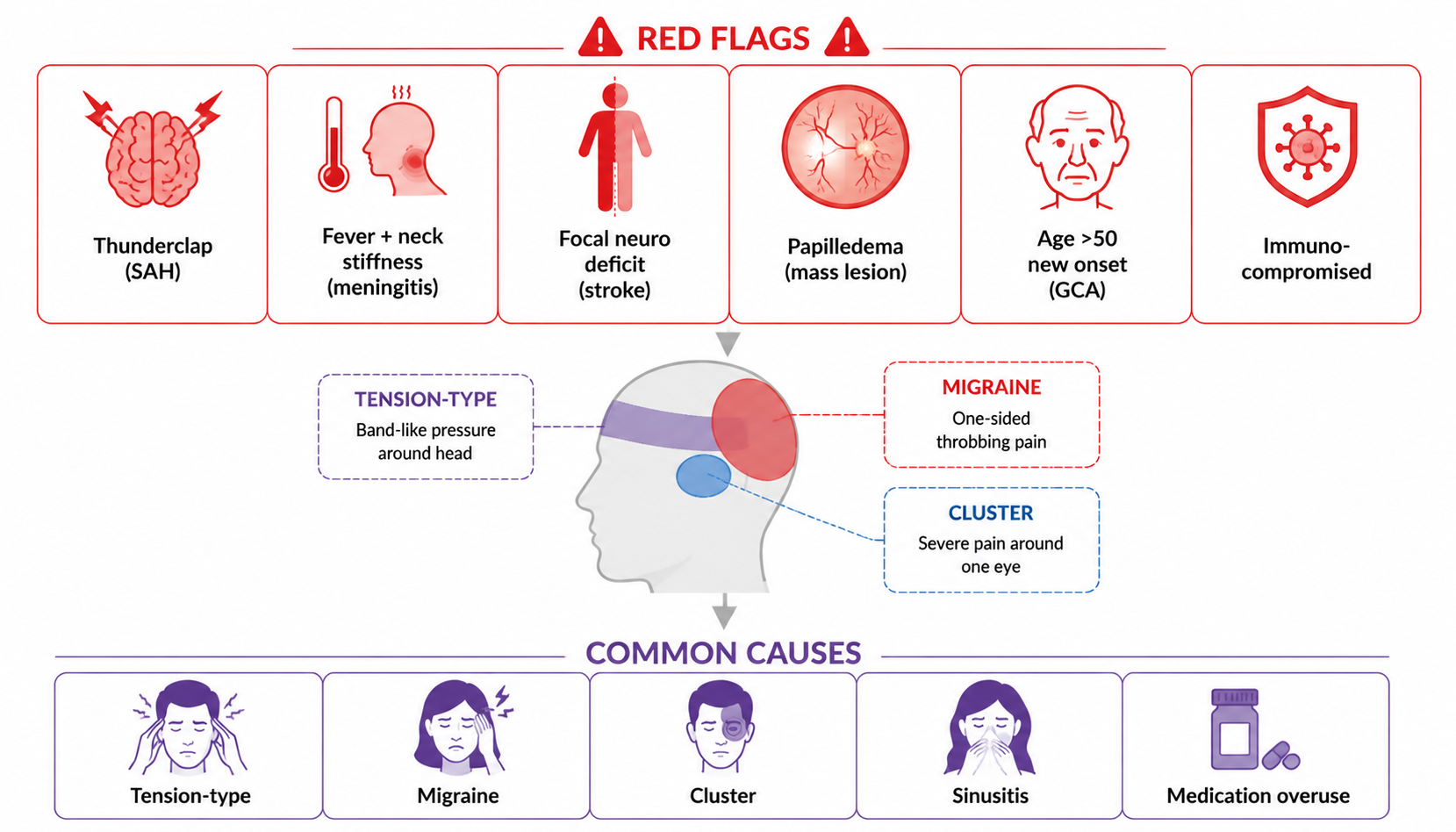
| Intracranial | Migraine, tension-type, cluster; meningitis/encephalitis (fever + stiff neck + headache); SAH (thunderclap); tumor (progressive, morning worse, ± papilledema, ± focal signs); IIH (papilledema, worse lying) |
| Extracranial | Sinusitis, dental, TMJ, temporal arteritis (elderly, jaw claudication, ↓vision) |
| Systemic | Hypertension, fever, hypoxia, carbon monoxide, anemia |
| Others | Drugs (nitrates), caffeine withdrawal, post-LP headache (positional) |
Red Flags (headache requiring urgent workup)
- Thunderclap (maximal at onset — SAH)
- Fever + neck stiffness (meningitis)
- New headache in elderly (temporal arteritis, tumor)
- Progressive, worse in morning + vomiting (↑ICP/tumor)
- Focal neurological deficit, papilledema
- Headache with cancer/immunosuppression/pregnancy/anticoagulation
Core Concepts — Vertigo & Dizziness (眩晕、头昏)
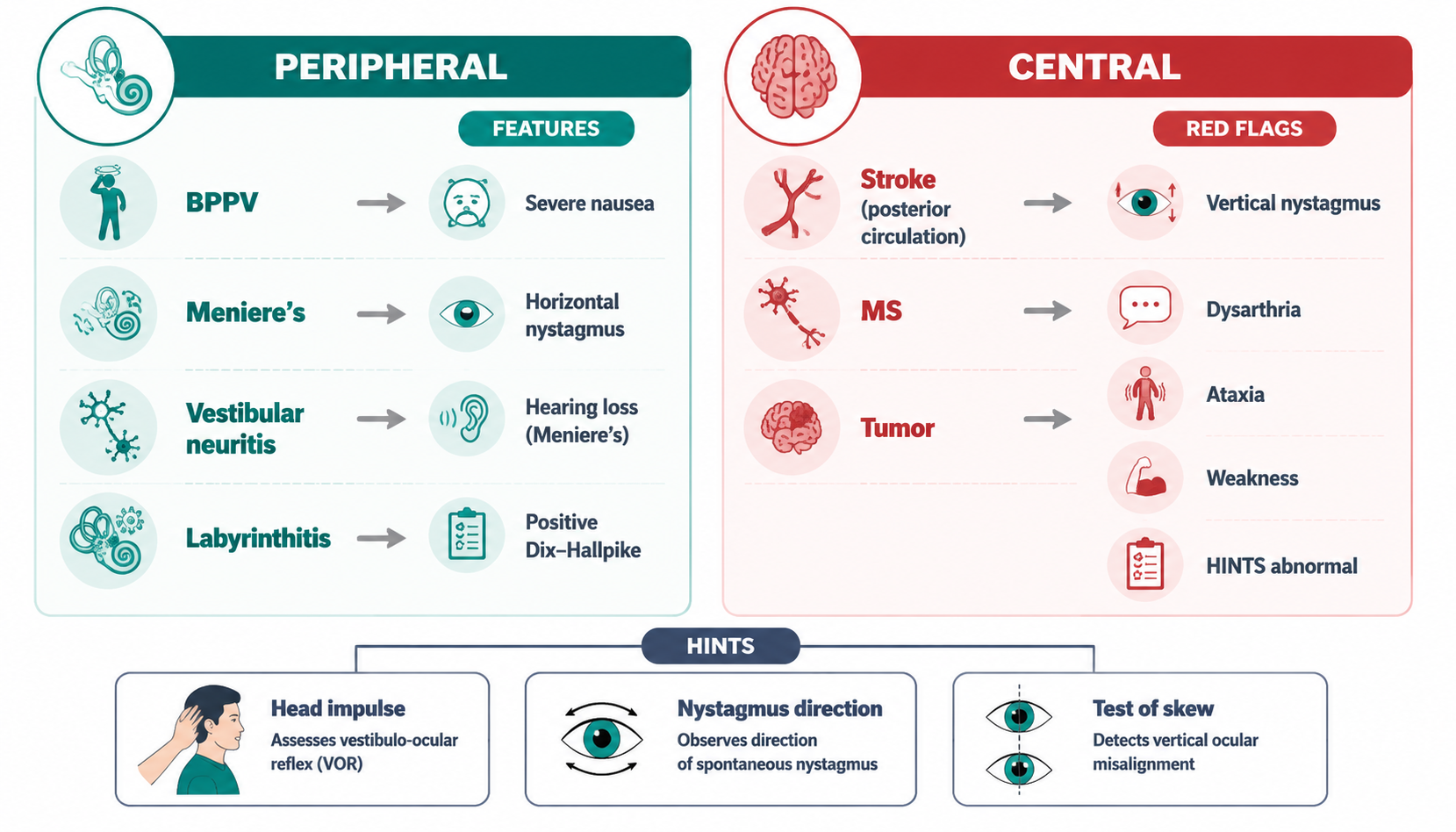
- Vertigo = illusion of movement (spinning) — vestibular: peripheral (BPPV, vestibular neuritis, Ménière's) vs central (brainstem/cerebellar: stroke, MS, tumor)
- Peripheral: intense, nystagmus horizontal, no neuro deficit, hearing loss/tinnitus (Ménière's), Dix-Hallpike positive (BPPV)
- Central: less intense, vertical/rotatory nystagmus, other neuro signs, stroke risk factors
- Dizziness/头昏 = lightheadedness, imbalance, presyncope — non-specific (anemia, orthostatic, anxiety, cardiac)
Core Concepts — Lumbodorsalgia & Arthralgia (腰背痛、关节痛)
Lumbodorsalgia
- Mechanical: muscle strain, disc herniation (radicular pain), spinal stenosis (neurogenic claudication), spondylolisthesis, facet OA
- Inflammatory: ankylosing spondylitis (young man, morning stiffness, improves with exercise, sacroiliitis)
- Neoplastic/metabolic: metastases (elderly, night pain, weight loss), osteoporotic fracture, infection (discitis/osteomyelitis — fever)
- Red flags: age <20 or >50, night pain, fever, cancer history, weight loss, IVDU, neuro deficits, cauda equina (saddle anesthesia, urinary retention — emergency)
Arthralgia vs Arthritis
- Arthralgia = joint pain (no inflammation); Arthritis = joint inflammation (swelling, redness, warmth, effusion, limited motion, morning stiffness)
- Monoarthritis: gout (first MTP), septic arthritis (emergency — aspirate), trauma, OA
- Polyarthritis: RA (small joints, symmetric, morning stiffness >1h), OA (large/weight-bearing, asymmetric, crepitus), SLE, rheumatic fever (migratory, after Strep), psoriatic, reactive (post-GI/UTI)
- Septic arthritis and gout/pseudogout need joint aspiration — never miss septic joint
High-Yield Points
- Consciousness = arousal (ARAS, brainstem) + awareness (cortex) — memorize
- Levels: alert → lethargy → stupor → light coma → deep coma (plus confusion, delirium)
- GCS ≤8 = coma; E4 V5 M6 = 15; fixed pupils + absent oculocephalic = poor prognosis
- Vasovagal faint = most common cause of syncope; heart stops 4–5 s → LOC
- Syncope vs seizure: prodrome + flaccid + rapid recovery (syncope) vs tonic-clonic + tongue bite + post-ictal confusion (seizure)
- Headache red flags: thunderclap (SAH), fever + stiff neck (meningitis), elderly new headache (GCA), morning worse + vomiting (↑ICP)
- Peripheral vs central vertigo: intensity, nystagmus type, hearing loss, neuro deficits
- Back pain red flags: cauda equina (saddle anesthesia/retention = emergency), cancer, infection, fracture
- Septic joint: aspirate immediately — don't wait for imaging
LMCHK OSCE Practice
- Neurological short case (8 min): aim to find the location of lesion; chronic neuro cases: poliomyelitis, Charcot-Marie-Tooth, neuromuscular junction disease
- Coma assessment: GCS, pupils (size/reactivity), fundi (papilledema), meningism, focal signs, vitals; get collateral history (onset, drugs, seizures)
- Cranial nerves mnemonic: On Old Olympus's Towering Tops, A Finn And German Vended Some Hops (I–XII)
- Facial palsy: UMN (spares forehead — forehead sparing) vs LMN (whole half face, forehead involved) — key discriminator
- Syncope workup: orthostatic BP, ECG (prolonged QT, Brugada), cardiac echo (AS, HCM), history from witnesses
- Gait exam: recognize types (hemiplegic, waddling — DMD, high-steppage — GBS, ataxic)
Topic Summary
Consciousness disturbance: two components (arousal/awareness), five levels, GCS scoring, and a tri-level etiologic approach (CNS vs metabolic vs toxic). Syncope: brief LOC from ↓cerebral perfusion — vasovagal most common; distinguish from seizure. Headache: mechanism (vascular/meningeal/nerve/muscle) and red-flag screening. Vertigo: peripheral vs central. Lumbodorsalgia/arthralgia: mechanical vs inflammatory; never miss cauda equina or septic arthritis.