Preparatory Mindset
Palpitation, cyanosis, and chest pain are the classic cardiovascular symptoms. They require you to separate symptoms (subjective) from signs (objective) and think in terms of mechanism (hemodynamics, rhythm, neurohumoral). Chest pain demands immediate life-threatening screening (ACS, aortic dissection, PE, tension pneumothorax). For palpitation, distinguish arrhythmia from normal rhythm; for cyanosis, distinguish central from peripheral. Always anchor with vital signs, ECG, and the CHA2DS2-VASc / HAS-BLED scores when A-fib is present.
Illustrations(图解速览)
Core Concepts — Palpitation (心悸)
Definition
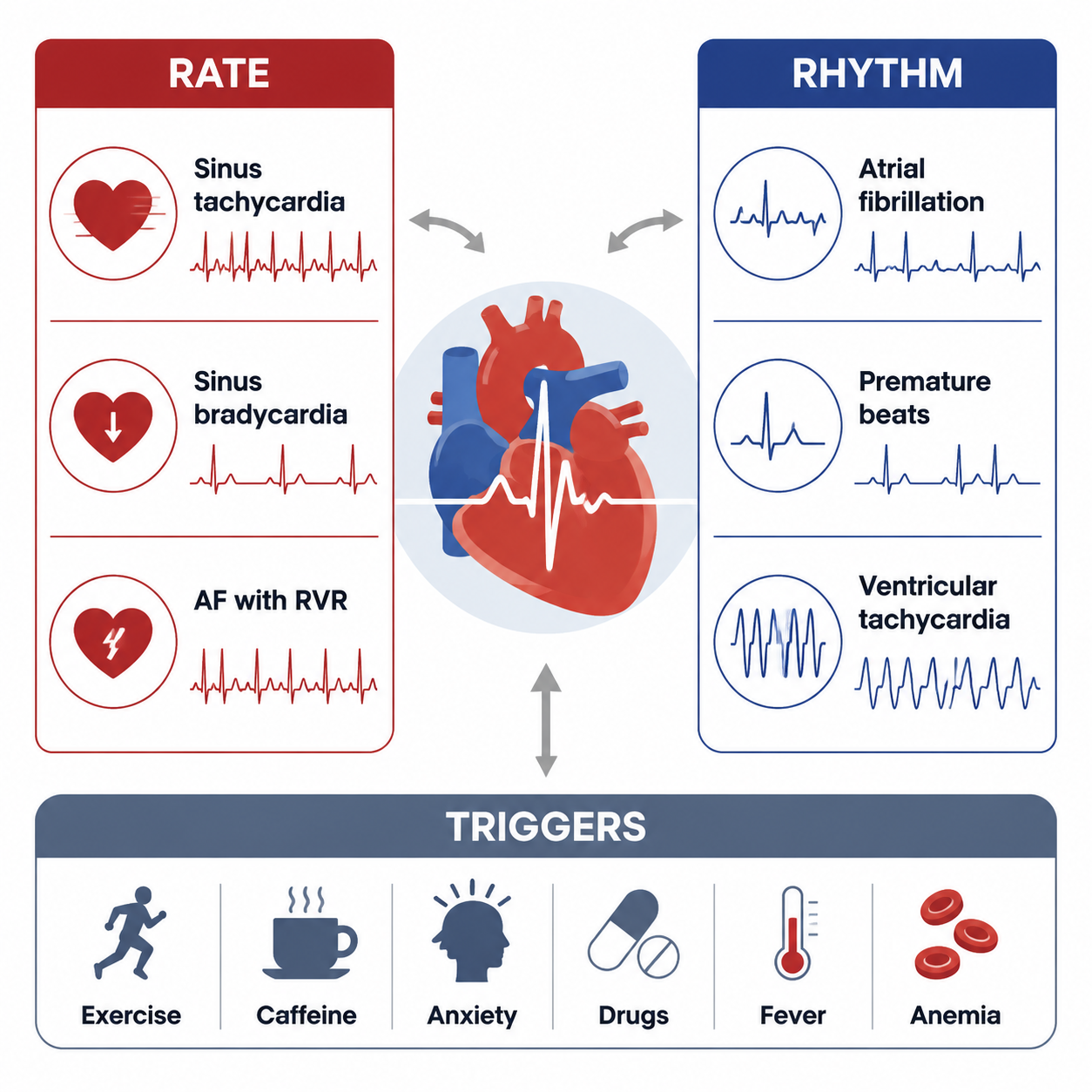
- Palpitations = unpleasant awareness of the heart: fluttering, pounding, dropped/missed beats, throbbing
- Caused by changes in heart rate or rhythm — but palpitation ≠ arrhythmia ≠ tachycardia: rate can be fast, slow, or normal; rhythm regular or irregular
Etiology
| Category | Causes |
|---|---|
| Physiological | Stress/anxiety, strenuous activity, fatigue, pregnancy/menopause/menstruation, caffeine/nicotine/alcohol, drugs (adrenaline, ephedrine, atropine, levothyroxine) |
| Augmented contractility | Ventricular hypertrophy (HTN, aortic insufficiency, mitral insufficiency, PDA, VSD, Vit B1 deficiency), hyperthyroidism, anemia, fever, hypoglycemia, pheochromocytoma |
| Arrhythmias | Tachycardia (sinus, SVT, VT), bradycardia (sinus, AV block, sick sinus), extrasystole, flutter/fibrillation, irregular rhythm |
| Heart failure | — |
| Cardiac neurosis | Beta-receptor hyperactivity, dysautonomia |
| Other | Pleural, respiratory, biliary diseases, altitude sickness |
- Mechanism: hemodynamic changes, arrhythmia, neurohumoral regulation, nervous/mental factors
Associated Symptoms — Clinical Clues
| Palpitation + | Think |
|---|---|
| Chest pain | CAD, myocarditis, pericarditis, neurosis |
| Fever | Acute infection, pneumonia, rheumatic fever, myocarditis, pericarditis, infective endocarditis |
| Anemia | Acute blood loss |
| Dyspnea | MI, myocarditis, pericarditis, heart failure, severe anemia |
| Weight loss + sweating | Hyperthyroidism |
| Cyanosis | Congenital heart defect, right heart failure, shock |
| Syncope | Cardiac arrest, high-grade AV block, VT, A-fib, sick sinus |
Atrial Fibrillation — High-Yield Detail
- One of the most common arrhythmias; irregularly irregular ventricular rhythm without sinus P waves
- Risk factors: CAD, HTN, valvular disease, myocarditis; obesity, diabetes, alcohol; genetic
- Complications: stroke, systemic embolism, heart failure
- Treatment: assess ischemia/bleeding risk → CHA2DS2-VASc (anticoagulate ≥2) + HAS-BLED (bleeding risk) → anticoagulation (warfarin/NOACs) + rate/rhythm control
| CHA2DS2-VASc | Points |
|---|---|
| C Congestive heart failure | 1 |
| H Hypertension | 1 |
| A Age ≥75 | 2 |
| D Diabetes | 1 |
| S Stroke/TIA | 2 |
| V Vascular disease | 1 |
| A Age 65–74 | 1 |
| S female Sex | 1 |
| HAS-BLED | Points |
|---|---|
| H Hypertension (SBP>160) | 1 |
| A Abnormal renal/liver function | 1 each |
| S Stroke | 1 |
| B Bleeding/predisposition | 1 |
| L Labile INR | 1 |
| E Elderly >65 | 1 |
| D Drugs/alcohol | 1 each |
Core Concepts — Cyanosis (发绀)
Definition & Types
- Cyanosis = bluish discoloration of skin/mucous membranes due to reduced hemoglobin >50 g/L (5 g/dL) in capillary blood
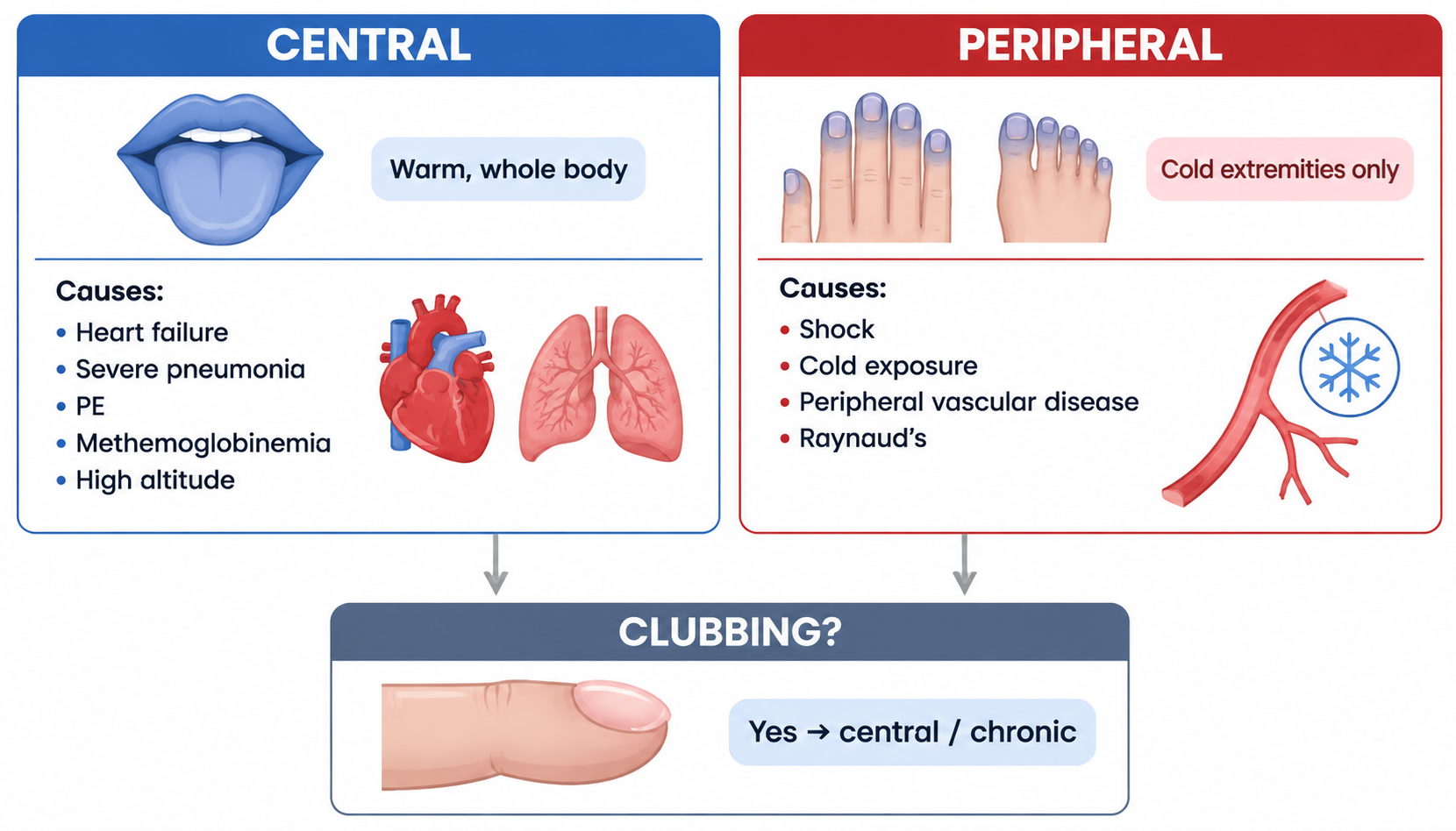
- Central cyanosis: decreased arterial O2 saturation — mucous membranes + skin, warm extremities; lung disease (shunt, severe V/Q mismatch), congenital heart disease (right-to-left shunt)
- Peripheral cyanosis: normal arterial O2 — extremities only, cold; low cardiac output, cold exposure, peripheral vasoconstriction, shock, Raynaud's
- Mixed: heart failure (low output + pulmonary congestion)
Causes
- Respiratory: severe pneumonia, pulmonary edema, COPD, ARDS
- Cardiac: congenital heart disease (tetralogy of Fallot — cyanosis + clubbing), heart failure, pulmonary hypertension
- Hematologic: methemoglobinemia (chocolate-colored blood, no response to O2)
- Peripheral: shock, cold, Raynaud's, venous obstruction (deep vein thrombosis)
Key discriminators
| Feature | Central | Peripheral |
|---|---|---|
| Site | Mucous membranes, tongue, trunk | Extremities (nail beds, fingers/toes) |
| Temperature | Warm | Cold |
| Clubbing | Yes (if chronic) | Usually no |
| Response to O2 | Improves (unless shunt) | No change |
Core Concepts — Chest Pain (胸痛)
Etiology
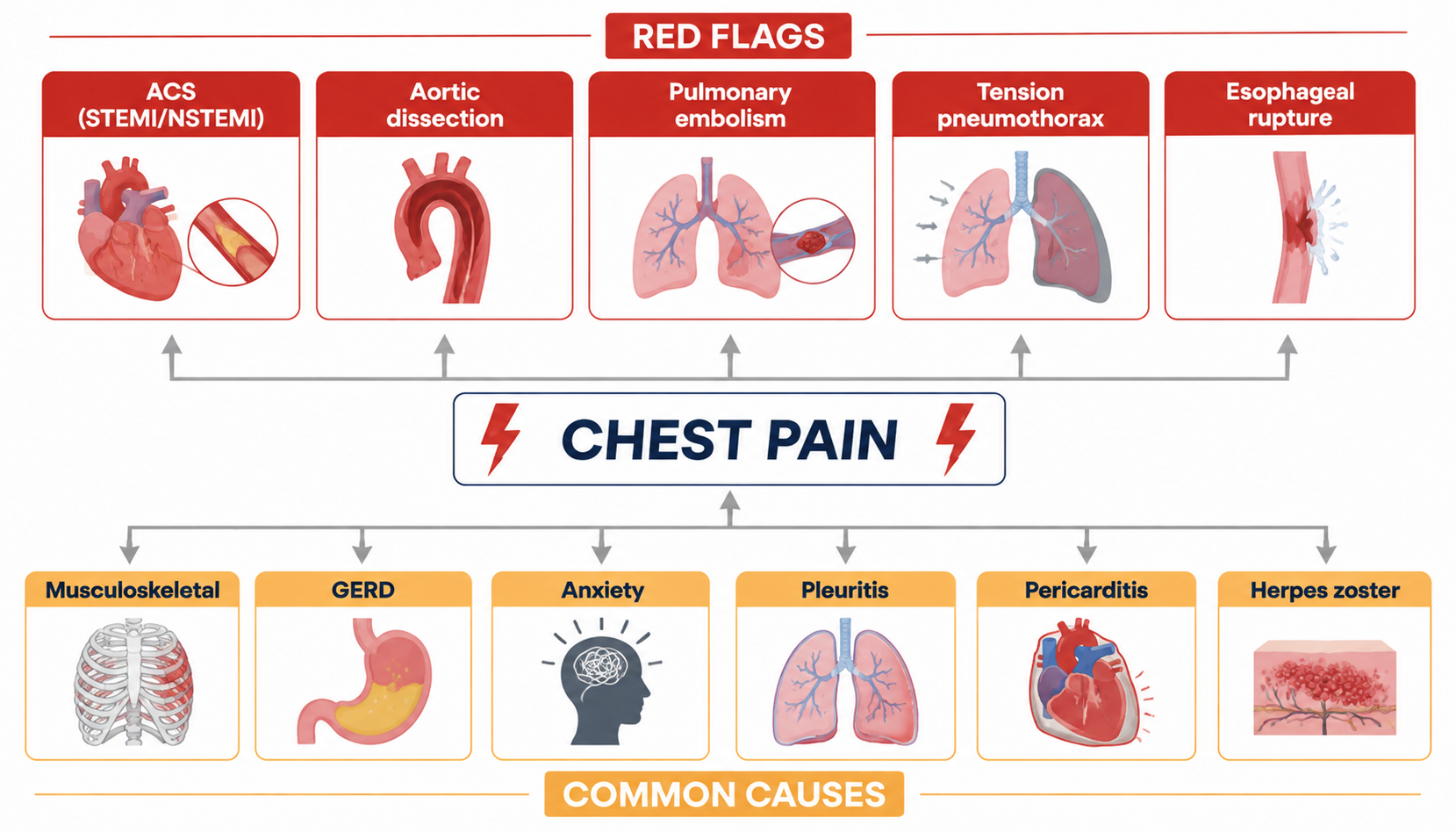
- Chest wall: costochondritis, rib fracture, herpes zoster (dermatomal, does not cross midline), muscle strain
- Cardiovascular: angina, MI, pericarditis, aortic dissection, myocarditis
- Respiratory: pleurisy, pneumonia, pneumothorax, pulmonary embolism, lung cancer
- GI: GERD/esophagitis, esophageal spasm, peptic ulcer, biliary disease
- Mediastinal: mediastinal tumor, aortic aneurysm
- Psychogenic: neurosis, anxiety
Clinical Features by Cause
| Cause | Location | Nature | Aggravating | Relieving |
|---|---|---|---|---|
| Angina/MI | Retrosternal/precordial, radiates left arm/jaw | Crushing, pressure, tight ("like angina only worse" in MI) | Exertion, emotion | Rest, nitroglycerin (angina; MI less so) |
| Aortic dissection | Anterior chest → back, migrating | Tearing, excruciating, maximal at onset | — | — |
| Pericarditis | Precordial, positional | Sharp, pleuritic | Lying flat, inspiration, coughing | Sitting forward |
| Pleurisy/PE | Lateral, pleuritic | Sharp, stabbing | Cough, deep breath | — |
| Pneumothorax | Sudden one-sided | Sharp, dyspnea | — | — |
| GERD/esophagitis | Retrosternal | Burning | Lying, after meals | Antacids |
| Herpes zoster | Dermatomal | Burning, lancinating | Touch | — |
| Chest wall | Localized | Aching, reproducible | Palpation | — |
History-taking (Chest Pain)
Use OLD CART/SOCRATES: location, quality, onset, severity, radiation, aggravating/relieving factors, associated symptoms (nausea/vomiting, sweating, dizziness, palpitation, SOB). Ask for: "crushing?", "tight?", "tearing?", "stabbing?" — and radiation to left arm/jaw → cardiac.
High-Yield Points
- Palpitation ≠ arrhythmia ≠ tachycardia
- Palpitation + weight loss/sweating → hyperthyroidism; + syncope → VT/AV block/A-fib/sick sinus
- A-fib: irregularly irregular, no P waves; pulse deficit (HR > pulse); CHA2DS2-VASc ≥2 → anticoagulate
- Central vs peripheral cyanosis: mucous membranes+warm+clubbing vs extremities+cold; methemoglobinemia = chocolate blood
- Cyanosis threshold: reduced Hb >5 g/dL (deoxyhemoglobin)
- Chest pain red flags: tearing back pain (aortic dissection), crushing + radiation (ACS), sudden + dyspnea (pneumothorax/PE), positional + pleuritic (pericarditis)
- Angina: exertional, relieved by rest/GTN; MI: longer, unrelieved, "like my angina only worse"
- Chest pain with unstable vitals → postpone MR/SPECT; act now
LMCHK OSCE Practice
- CVS short case (8 min): 70% of cases are valve problems — check for mid-sternotomy scars (valve replacement, CABG)
- Note murmurs: AS (ESM at right upper sternal edge, radiating to carotids), AR (early diastolic, left sternal edge), MS (diastolic rumble at apex, opening snap), MR (pansystolic at apex radiating to axilla)
- A-fib: feel irregularly irregular pulse, check pulse deficit, count apical rate
- Comment on cyanosis/clubbing; measure BP both arms (dissection), check radio-femoral delay (coarctation)
- ECG in chest pain: look for ST elevation (MI), ST depression/T inversion (ischemia), LVH, arrhythmia
Topic Summary
Palpitation: subjective awareness of heart — screen for arrhythmia, hyperthyroidism, anemia, HF; A-fib management via CHA2DS2-VASc/HAS-BLED. Cyanosis: central (deoxygenation, warm, clubbing) vs peripheral (low flow, cold); threshold deoxyHb >5 g/dL. Chest pain: rule out life-threats first (ACS, dissection, PE, tension pneumothorax) — characterize location/nature/radiation/aggravators, and use the history (crushing=cardiac, tearing=dissection, pleuritic=pericarditis/pleurisy, burning=GERD) to drive investigations.